
POLITICS
Alleged Secret US-Iran Deal Emerges, Raising Hopes for Regional Peace and Economic Recovery

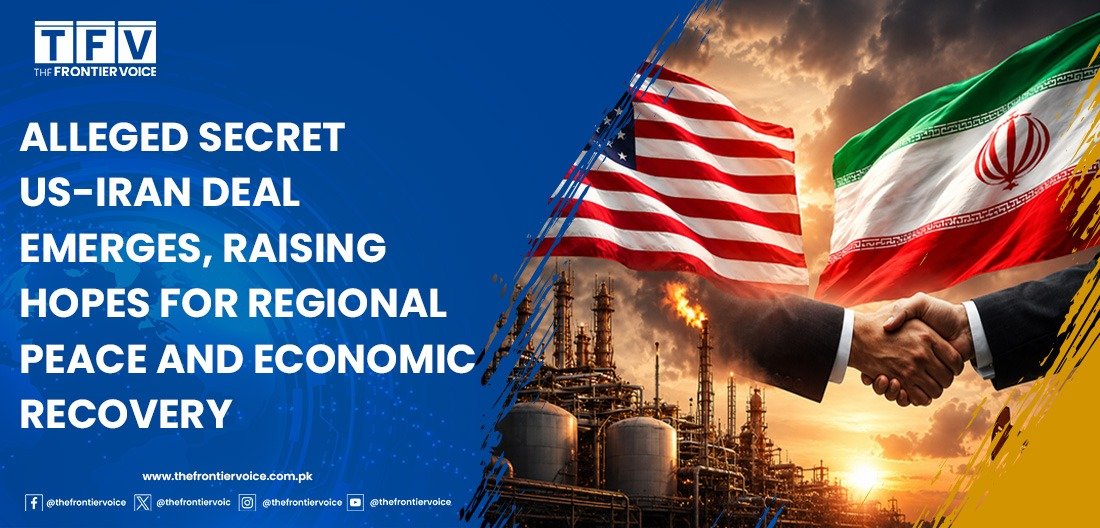
Significant details of an alleged 14-point secret agreement between the United States and Iran have surfaced through reports published by Bloomberg and Al Arabiya, outlining a broad framework aimed at reducing tensions across the Middle East, restoring regional stability, and paving the way for a future comprehensive peace agreement.
Although the full text of the agreement has not been officially released, media reports suggest that both countries have agreed on a roadmap addressing military, political, economic, and nuclear issues that have long defined relations between Washington and Tehran.
One of the most significant aspects of the reported agreement concerns Iran’s nuclear program. According to the leaked details, Iran has reportedly committed that it will neither develop nor acquire nuclear weapons. Furthermore, Tehran is said to have agreed to engage in additional negotiations over the next sixty days regarding the future of its highly enriched uranium stockpiles, including potential reduction, disposal, or transfer arrangements.
The sixty-day negotiation period is expected to begin immediately after the signing of the agreement, reportedly scheduled for Friday.
The framework allegedly prioritizes an immediate and permanent ceasefire across all active fronts, including Lebanon. Both the United States and Iran, along with their respective allies, are said to have pledged not to undertake military actions against one another or threaten the use of force.
While Israel is not explicitly mentioned in the reported text, analysts note that references to “all fronts” and “allied actors” strongly suggest that the arrangement may also seek to reduce hostilities involving Israel and Iran-backed groups in the region.
The agreement reportedly includes mutual commitments to respect sovereignty, territorial integrity, and non-interference in each other’s internal affairs.
A major maritime component of the deal focuses on restoring commercial navigation and regional shipping security. The United States is expected to ease restrictions affecting Iranian ports and maritime trade, while Iran would take immediate measures to ensure the uninterrupted movement of commercial vessels through the Strait of Hormuz. Reports indicate that maritime operations are expected to return to pre-conflict conditions within thirty days.
The framework also reportedly contains provisions regarding the future US military presence in the region. Once a final peace agreement is concluded, Washington would begin withdrawing its forces from surrounding areas, with a target of completing the process within thirty days of the final settlement.
Economic reconstruction represents another major pillar of the proposed agreement. According to the reports, the United States and regional partners would support a comprehensive economic recovery plan for Iran, potentially backed by at least $300 billion in funding. The implementation mechanisms for this initiative are expected to be finalized during the upcoming negotiation phase.
The agreement further outlines a pathway toward lifting international and unilateral sanctions imposed on Iran. Until a comprehensive sanctions-removal framework is completed, Washington may reportedly provide temporary waivers allowing Iran to export crude oil, petrochemical products, and access related banking, insurance, and shipping services.
In addition, frozen Iranian assets held abroad could be released gradually as negotiations progress, enabling Iran’s central bank to utilize the funds for economic stabilization and development purposes.
To oversee implementation, the framework reportedly proposes the establishment of a joint monitoring committee tasked with ensuring compliance by both parties. Ultimately, the final peace settlement could be endorsed through a binding resolution at the United Nations Security Council, providing international legal backing to the agreement.
If implemented, analysts believe the arrangement could mark one of the most significant diplomatic breakthroughs between Washington and Tehran in decades, potentially reshaping the geopolitical landscape of the Middle East and reducing the risk of broader regional conflict.