
BUSINESS/FINANCE
Pakistan Expects Economic Gains After Iran Deal, Targets Stronger Growth in FY2027, Aurangzeb

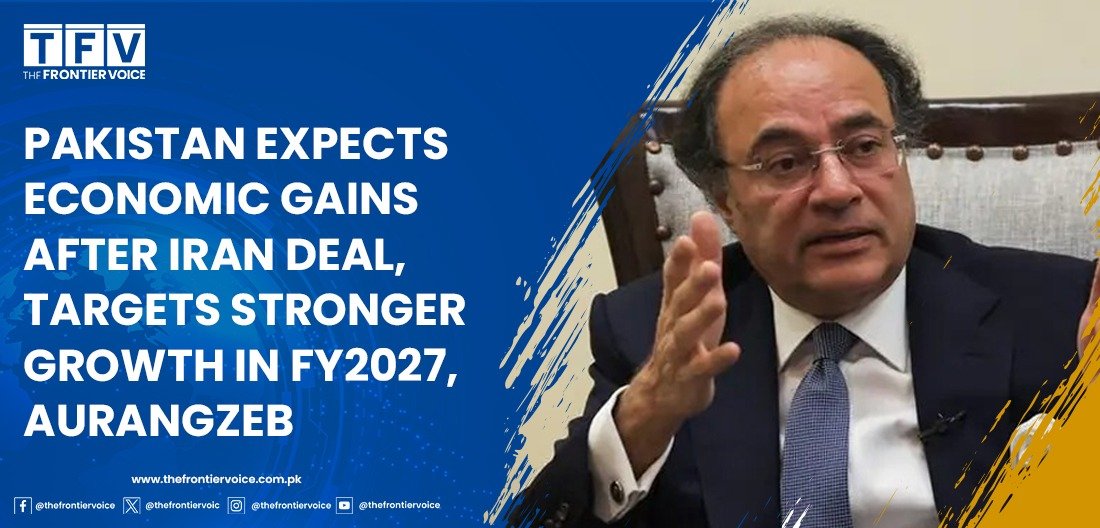
Pakistan’s Finance Minister Muhammad Aurangzeb has expressed optimism that Pakistan’s economic outlook will improve following the Iran agreement and the end of the regional conflict, saying the country is looking toward stronger economic performance in fiscal year 2027.
In an interview with an international news agency, Aurangzeb said it would be premature to make immediate changes to the federal budget, noting that the conflict had damaged energy infrastructure and disrupted supply chains, which would take time to fully recover.
The finance minister said the conflict had pushed inflation back into double digits. However, the government has set a 4 percent economic growth target and an inflation target of 8.2 percent for fiscal year 2027.
Aurangzeb revealed that defense spending has been increased by 18 percent to Rs3 trillion in response to evolving security requirements.
He said the government is relying on higher tax revenues to maintain its IMF-supported reform program. Pakistan is also seeking to improve its debt profile by replacing some bilateral loans with commercial borrowing, although the country does not intend to increase its overall external debt burden.
The finance minister disclosed that Pakistan repaid $3.4 billion in deposits to the United Arab Emirates last month while also securing support from Emirati commercial banks.
He further stated that Pakistan plans to issue additional Panda Bonds, Eurobonds, and US dollar-denominated bonds. While the size of future issuances has not yet been determined, the government estimates commercial and Eurobond financing of $2.82 billion in the next fiscal year.
According to Aurangzeb, Pakistan has approval to issue Panda Bonds worth up to $1 billion, while the country’s first $250 million Panda Bond issuance carried a 95 percent guarantee.
The finance minister also announced that the government plans to regulate cryptocurrency, tokenization, and digital asset exchanges. Once a regulatory framework is in place, authorities will consider imposing taxes on these sectors.