
POLITICS
Iran Links End of Conflict to Israeli Withdrawal from Lebanon, Warns Against Further Strikes

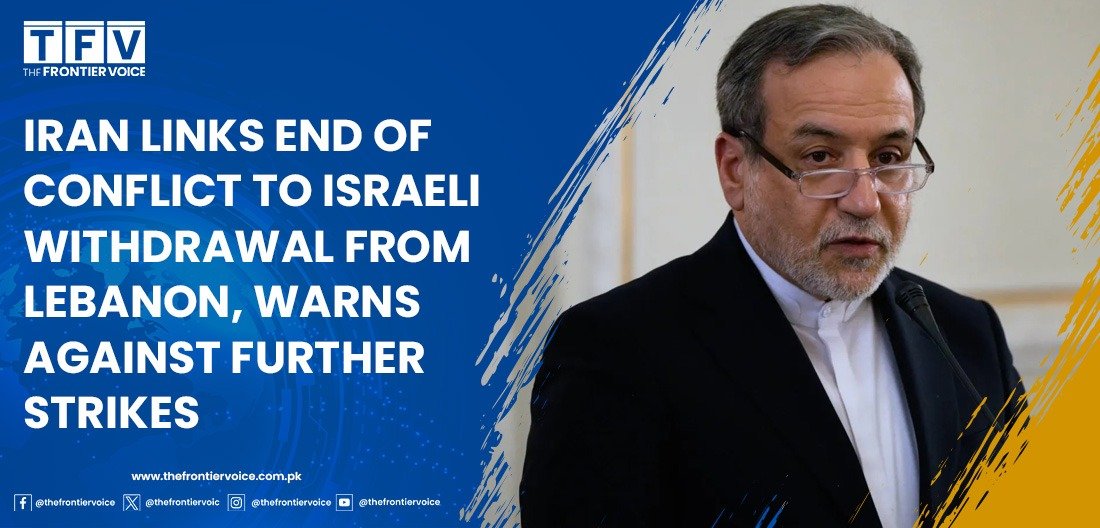
Iranian Foreign Minister Abbas Araghchi has stated that the conflict cannot be considered fully resolved unless Israeli forces withdraw from Lebanese territories occupied during the war, stressing that peace in Lebanon is an inseparable part of any broader regional settlement.
According to Iranian state television, Araghchi made the remarks during a briefing with foreign diplomats on Tuesday. He emphasized that the end of hostilities involving Iran must also include a complete end to the conflict in Lebanon.
“The conclusion of the war in Lebanon is an essential and inseparable component of ending the conflict,” Araghchi said. “As long as Israeli forces remain in areas they occupied during the war, the conflict cannot be regarded as fully over.”
The Iranian foreign minister further warned that any additional Israeli military action against Lebanon would be viewed by Tehran as a violation of the recently signed memorandum of understanding aimed at reducing regional tensions.
Araghchi also announced that the heads of the Iranian and American negotiating teams are scheduled to meet in Geneva on Friday. Formal negotiations between Tehran and Washington are expected to begin immediately after the signing of the memorandum.
His comments come after US President Donald Trump announced that the United States and Iran had signed a preliminary agreement aimed at ending the conflict between the two countries. However, the full details of the agreement have not yet been made public, and both sides acknowledge that further negotiations are required to achieve a permanent ceasefire.
Speaking to reporters during the G7 Summit in France, President Trump claimed that the agreement had already been finalized. He also revealed that US Vice President JD Vance would attend a formal signing ceremony in Geneva on Friday.
According to reports, the agreement includes a 60-day extension of the fragile ceasefire first announced in April. It is also expected to lead to the reopening of the Strait of Hormuz, which Iran effectively closed following military strikes by the United States and Israel earlier this year.
The next phase of negotiations is expected to focus on several complex issues, including the future of Iran’s nuclear program and broader regional security concerns.
Despite the signing of the preliminary accord, many aspects of the agreement remain undisclosed, leaving key details about its implementation and long-term impact unclear.