
HEALTH/LIFESTYLE
Experts Say There Is No Need to Panic Over Ebola and Hantavirus Headlines

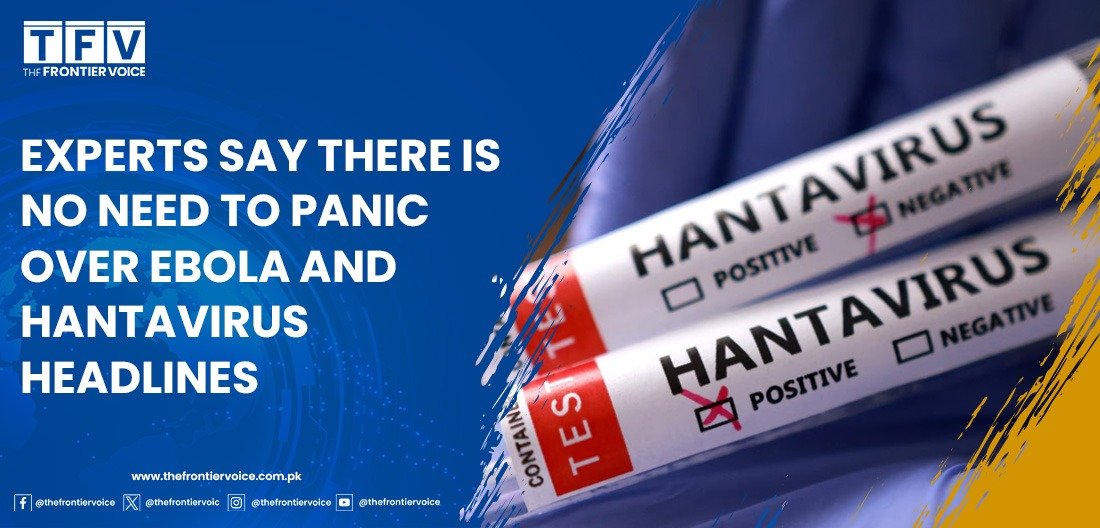
Recent reports about Ebola and Hantavirus outbreaks in different parts of the world have raised concerns among the public, but health experts say there is no reason for widespread panic.
According to a CNN report, Dr. Thomas Moore, Clinical Professor of Medicine at the University of Kansas School of Medicine, stated that while media headlines may sound alarming, the actual risk to the average traveler or citizen remains extremely low.
Dr. Ronald Nahass, an infectious disease specialist and president of the Infectious Diseases Society of America, explained that the fear created by the COVID-19 pandemic has made people more anxious about the possibility of future outbreaks.
Experts noted that Ebola is primarily transmitted through direct contact with the blood, bodily fluids, vomit, or waste of an infected person. Individuals who are infected but not yet showing symptoms generally do not pose a significant risk to others.
Regarding Hantavirus, specialists explained that most strains found in North America are not transmitted from person to person. Instead, they are usually spread through contact with rodents or their droppings. Only the rare Andes strain has shown the ability to spread between humans.
Health experts emphasized that people should be more concerned about common infectious diseases such as measles, influenza, COVID-19, RSV, mumps, and polio, which continue to pose a greater public health risk.
They also warned that declining vaccination rates in many countries are becoming a serious concern. Measles, in particular, remains one of the most contagious diseases and can spread rapidly among unvaccinated populations.
Experts recommend regular handwashing, staying up to date with vaccinations, maintaining good hygiene, wearing masks during outbreaks, and avoiding unnecessary exposure in crowded indoor spaces as the best ways to protect against infectious diseases.
Their overall message is clear: rather than fearing rare viruses, people should focus on practical preventive measures that can protect them from the diseases they are most likely to encounter.