TECHNOLOGY
Scientists Explain Why Every Human Voice Is Different

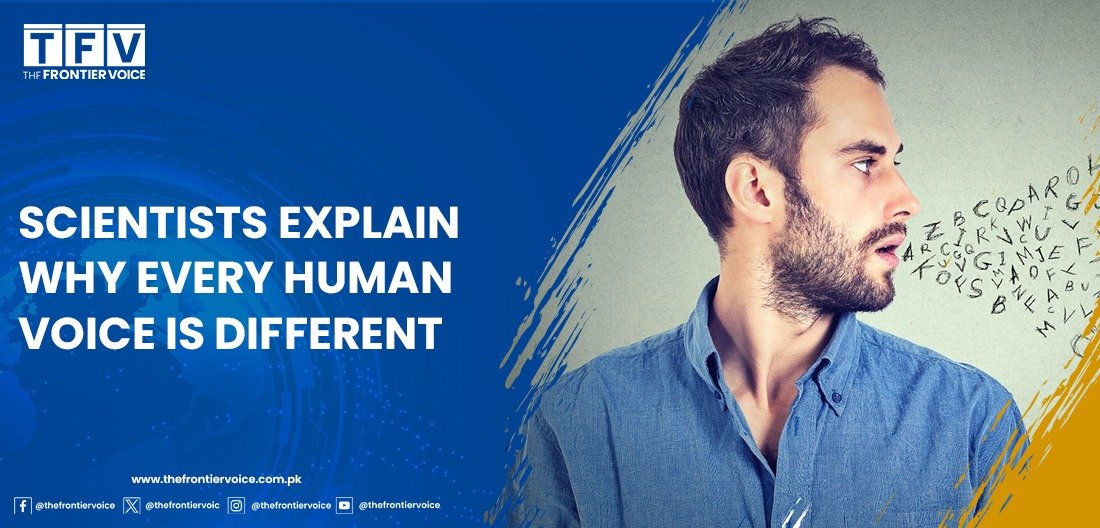
The human voice is considered one of the most unique and personal forms of identity. According to scientists, people can recognize the voice of a loved one within just a few words, and the human brain performs this recognition within milliseconds.
Research suggests that no two people among the billions living on Earth have exactly the same voice. Experts say this uniqueness is not only due to the complexity of the human body, but also the result of human evolution.
A 2022 study published in the National Library of Medicine found that many monkeys and other primates possess additional vocal membranes and air sacs in their throats along with vocal cords. Over the course of evolution, humans lost these extra structures.
Scientists explain that this change made the human voice box more stable, allowing humans to produce clearer, more controlled, and refined sounds instead of chaotic or noisy vocalizations common in many animals.
When sound leaves the vocal folds, it passes through the throat, mouth, and nasal cavity, which act as echo chambers and reshape the sound. Scientists refer to the remaining sound frequencies as “formants,” and these formants are what make every human voice unique.
Researchers say the length of the vocal tract, mouth shape, palate curve, throat depth, skull structure, and sinus cavities all influence a person’s voice. Even small differences in these features can completely change vocal resonance.
Studies also show that babies begin recognizing their mother’s voice while still in the womb and react differently to it compared to other sounds.
Scientists believe that as humans evolved and began living in larger social groups thousands of years ago, unique voices became essential for identification and communication, even across crowds, forests, or darkness.
Experts conclude that the human voice is not merely sound, but an acoustic signature shaped by millions of years of evolution and human biology.