
POLITICS
Up to 30,000 Militants Active in Afghanistan, Claims Russian Security Official

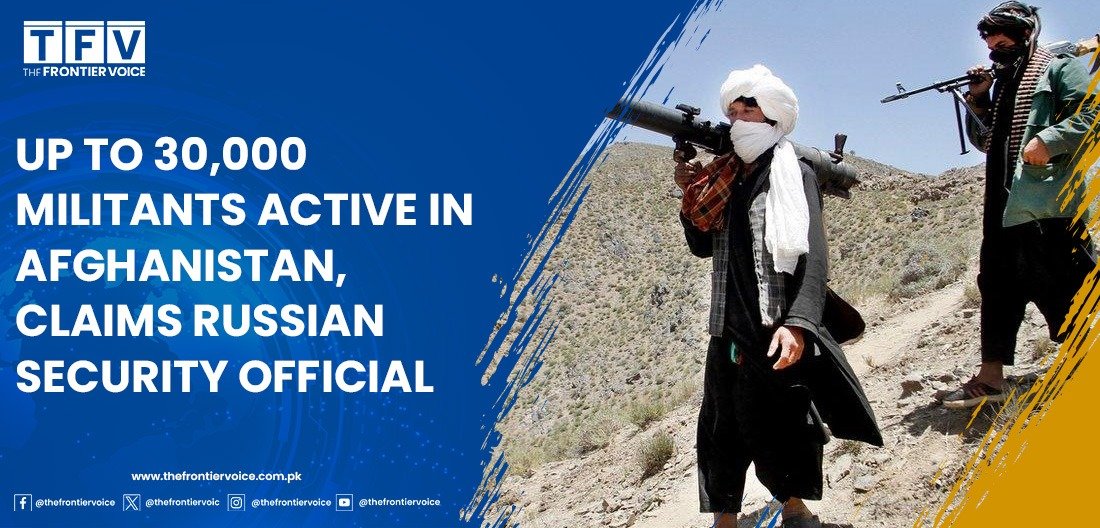
Russian Security Council Secretary Sergei Shoigu has claimed that between 18,000 and 30,000 militants are currently active in Afghanistan, creating what he described as a serious threat to regional security.
Speaking at the 21st meeting of the Secretaries of the Security Councils of the Shanghai Cooperation Organization (SCO), Shoigu said that more than 20 extremist groups are operating inside Afghanistan, while some militant organizations remain beyond the Taliban’s full control.
According to Russian media reports, Shoigu stated that around 3,000 ISIS-Khorasan fighters are currently present in Afghanistan. He claimed that during 2025, ISIS carried out 12 major attacks that killed 40 military personnel and 25 civilians, while injuring more than 50 others.
He acknowledged that the Taliban are actively fighting ISIS-K but warned that several extremist groups continue to operate across Afghanistan.
The Russian official also expressed concern over the increasing arrival of Uyghur, Tajik, and Uzbek fighters from Syria into Afghanistan. According to him, some of these individuals were previously linked to Hayat Tahrir al-Sham, raising further security concerns in the region.
Shoigu also highlighted the issue of drug trafficking. He said that opium production and poppy cultivation in Afghanistan have declined by nearly 90 percent since the Taliban returned to power. However, he warned that the production of synthetic drugs, especially methamphetamine, has increased significantly.
According to Shoigu, more than 30 tons of synthetic drugs were seized along Afghanistan’s borders during 2025.
He further stated that Afghanistan’s ongoing economic crisis has forced nearly four million people to remain involved in drug-related crop cultivation.
During his speech, Shoigu criticized Western countries, claiming that nearly 590 billion dollars in assets belonging to Russia, Iran, Iraq, Afghanistan, North Korea, Libya, Cuba, and Venezuela have been frozen by Western governments.
He said this situation may force many countries to reconsider keeping their national reserves in Western financial systems.