
HEALTH/LIFESTYLE
Why Does Your Head Hurt After Eating Ice Cream? Experts Explain the Science Behind Brain Freeze

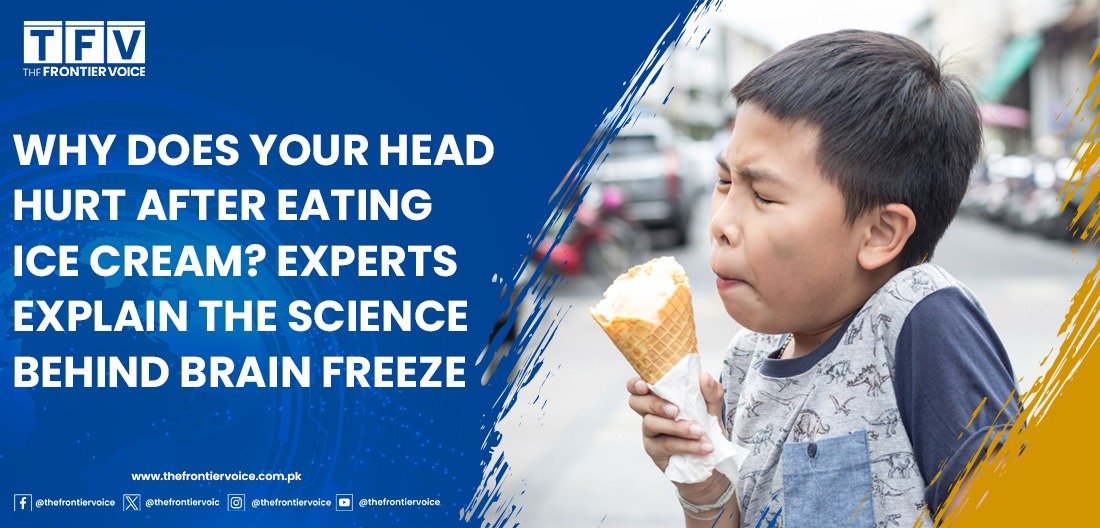
During hot summer days, many people enjoy ice cream, popsicles, and other frozen treats. However, a sudden sharp headache often follows after taking a large bite of something extremely cold. This temporary pain is commonly known as “brain freeze” or “ice cream headache.”
According to research from Harvard Medical School, brain freeze is actually part of the body’s natural defense mechanism designed to protect the brain from sudden temperature changes.
When a very cold substance touches the roof of the mouth, particularly the back of the palate, blood vessels in that area rapidly constrict. The brain detects the sudden drop in temperature and responds by increasing blood flow to warm the area.
Experts explain that the quick narrowing and subsequent expansion of blood vessels creates the brief but intense pain associated with brain freeze.
Interestingly, although the reaction begins in the mouth, the pain is usually felt in the forehead or temples. This occurs because the nerves involved are connected to the trigeminal nerve network, which also carries sensory information from the face and forehead.
As a result, the brain may misinterpret the source of the pain and perceive it in the head rather than in the mouth. This phenomenon is known as “referred pain.”
Brain freeze typically reaches peak intensity within 20 to 30 seconds and disappears on its own as blood vessels return to normal. Warming the roof of the mouth with the tongue or drinking a warm beverage can help relieve the discomfort more quickly.
Studies have also shown that people who suffer from migraines may experience brain freeze more frequently or more intensely, suggesting that both conditions may share certain neurological pathways.
Scientists continue to study brain freeze because it provides a safe and temporary way to better understand headache mechanisms and blood vessel responses in the human body.
Experts emphasize that while brain freeze can be uncomfortable, it is harmless and simply reflects the body’s natural effort to protect sensitive tissues from sudden exposure to extreme cold.