
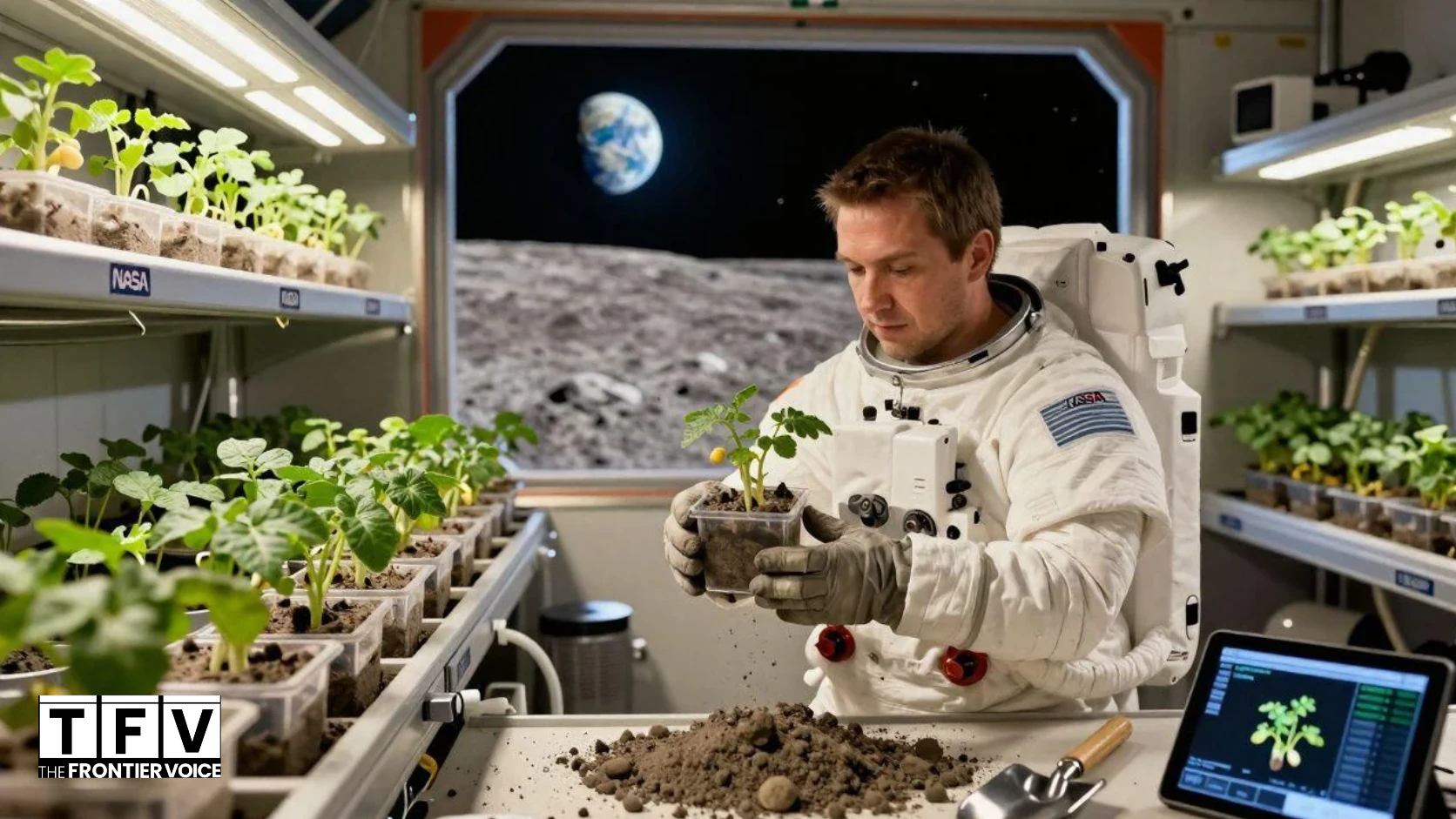
Scientists are exploring whether potatoes could become a viable food crop for future lunar settlements after research examined plant growth in simulated lunar soil under controlled conditions.
The study, published on November 19 in npj Microgravity, investigated potato growth in different lunar regolith simulants—materials designed to replicate the characteristics of soil found on the Moon. Researchers also tested amendments containing organic material to improve the growing environment.
Unlike Earth's agricultural soil, lunar regolith lacks many of the biological and organic properties that support conventional plant growth. Future lunar farming may therefore require specially prepared growing media, nutrient supplementation and carefully managed water and environmental conditions.
Potatoes are considered an attractive candidate for space agriculture because they provide carbohydrates, nutrients and relatively efficient food production. Growing food locally could reduce the amount of supplies astronauts would need to transport from Earth during long-duration missions.
The research focused on understanding how plants respond to lunar soil simulants and whether organic amendments could help improve growth. The work represents an important step toward studying agricultural systems that could support future human exploration beyond Earth.
However, the experiment does not mean potatoes have been successfully grown in actual lunar soil on the Moon. Simulated materials and greenhouse conditions are substantially different from the lunar environment, which includes extreme temperature variations, radiation exposure, low gravity and challenges involving water and infrastructure.
Scientists would still need to address these obstacles before food production could become practical on the lunar surface.
Nevertheless, the research highlights an increasingly important aspect of space exploration: future missions may depend not only on rockets and habitats, but also on the ability to produce food in environments where agriculture has never existed.