
Deep beneath the ocean's surface lives an animal that seems almost impossible to believe. It has three hearts, blue blood and a nervous system distributed throughout its eight arms. It can solve puzzles, open containers and change its appearance in seconds.
It is the octopus, one of the most fascinating and intelligent invertebrates on Earth.
The first extraordinary feature is its three hearts. Two of them pump blood towards the gills, where oxygen is absorbed from the water. The third circulates oxygen-rich blood around the rest of the body.
Unlike humans, whose blood is red because of haemoglobin, octopuses have blue blood. This is because their blood contains a copper-based protein called haemocyanin. It helps transport oxygen and is particularly useful in cold ocean environments.
But the octopus's most remarkable feature may be its nervous system.
An octopus has approximately 500 million neurons, with a large proportion located in its arms. This arrangement allows its arms to process sensory information and perform many movements locally, without requiring the central brain to direct every individual action.
In scientific experiments, octopuses have demonstrated the ability to open containers, navigate mazes and learn how to solve problems.
Their intelligence is not limited to finding food. Some have been observed using objects as shelter, exploring unfamiliar environments and learning through experience.
Their appearance is equally remarkable.
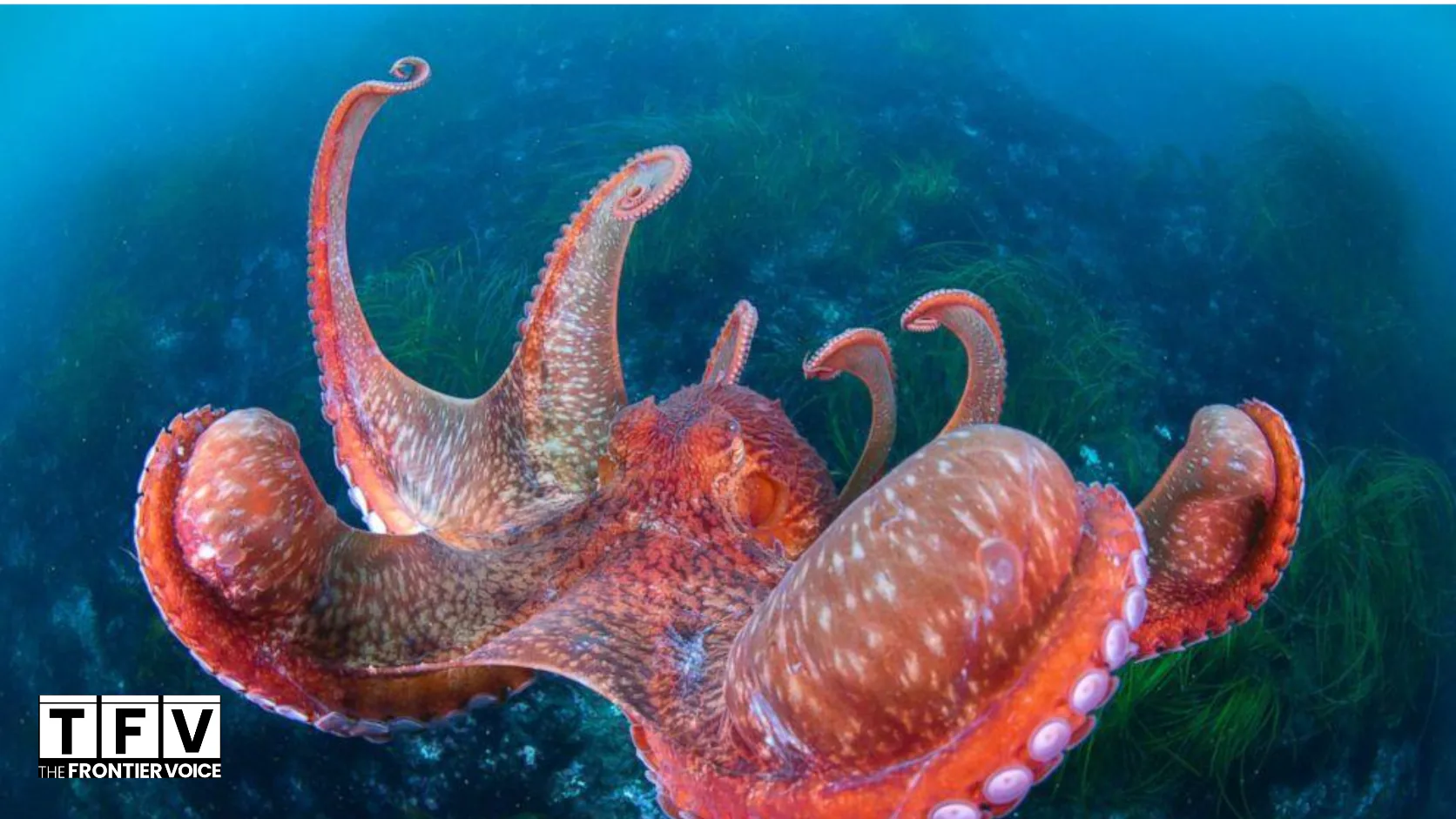
Octopuses have specialised skin cells called chromatophores, which allow them to change colour rapidly. Other structures in their skin help them alter their texture, making them resemble rocks, coral or other underwater surfaces.
This ability is essential for survival. It helps them hide from predators and approach prey without being detected.
Each of their eight arms is equipped with hundreds of suction cups that help them grip objects and explore their surroundings. These arms are also extremely flexible, allowing the animal to squeeze through surprisingly small openings.
Despite their intelligence, octopuses generally have relatively short lifespans. Many species live for only one or two years, although lifespans vary considerably between species.
Their unusual biology is attracting growing scientific interest, particularly in neuroscience, robotics and the study of intelligence.
The octopus offers a remarkable reminder that intelligence does not have to evolve in the same way everywhere.
Somewhere beneath the waves, an animal with three hearts and eight extraordinarily capable arms is demonstrating just how inventive nature can be.