
They were travelling towards the Moon when suddenly, an explosion rocked their spacecraft. Oxygen was running low, electricity was failing, and their journey had turned into a fight for survival. More than 200,000 miles from Earth, three astronauts faced a terrifying question: Would they ever make it home?
It happened in April 1970 during NASA's Apollo 13 mission.
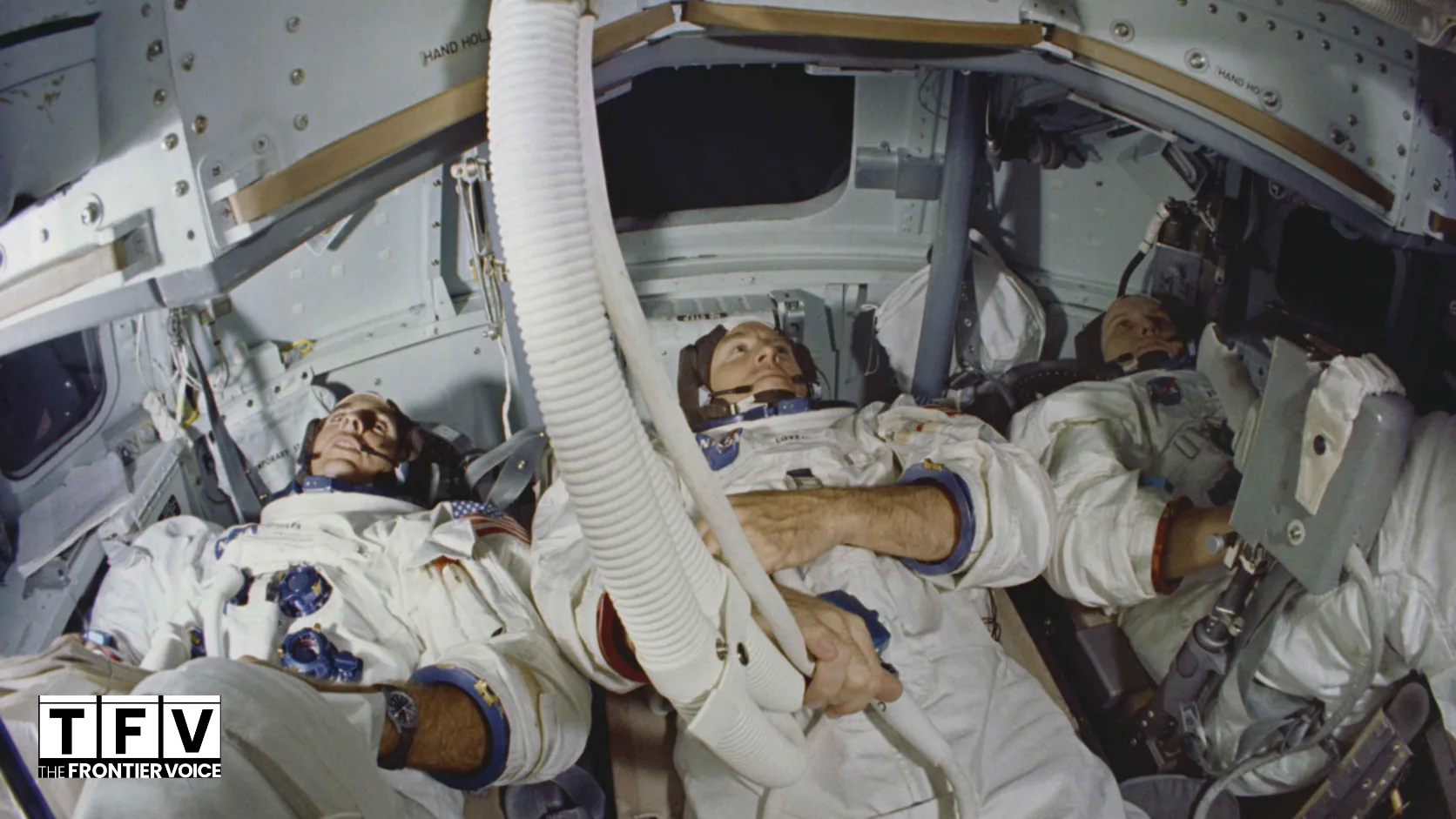
The spacecraft had launched with three astronauts on board: Jim Lovell, Jack Swigert and Fred Haise. Their mission was to land on the Moon, but two days into the journey, disaster struck.
On April 13, an oxygen tank exploded in the spacecraft's service module. The explosion damaged vital systems, disrupted the power supply and caused oxygen to escape.
The astronauts immediately informed Mission Control in Houston that something had gone seriously wrong.
Their lunar landing was cancelled. From that moment, the mission had only one objective: bring all three astronauts safely back to Earth.
But getting home was far from easy.
The astronauts had to shut down much of the command module to conserve power. They moved into the Lunar Module, a spacecraft originally designed to support only two people for a limited period near the Moon.
Now, it had to keep three astronauts alive.
One of the biggest dangers was the accumulation of carbon dioxide. If the gas reached dangerous levels, the astronauts could suffocate.
Back on Earth, NASA engineers faced a difficult challenge. They had to find a solution using only the equipment available inside the spacecraft.
They designed an improvised carbon dioxide filter using plastic bags, cardboard, tape and other materials already on board. The astronauts followed the instructions and managed to adapt the system.
Meanwhile, they conserved electricity and water, endured freezing temperatures and carefully navigated their spacecraft towards Earth.
After days of uncertainty, on April 17, 1970, the Apollo 13 command module safely splashed down in the Pacific Ocean.
All three astronauts survived.
Although the mission failed to achieve its original objective of landing on the Moon, it became one of NASA's greatest examples of teamwork, engineering and crisis management.
It is often remembered as a “successful failure” — a mission that did not achieve its original goal but succeeded in bringing its crew home alive.
Perhaps the most remarkable part of this story is that the astronauts were saved not by a miracle, but by the creativity and determination of people thousands of miles away, working against time to solve an almost impossible problem.