

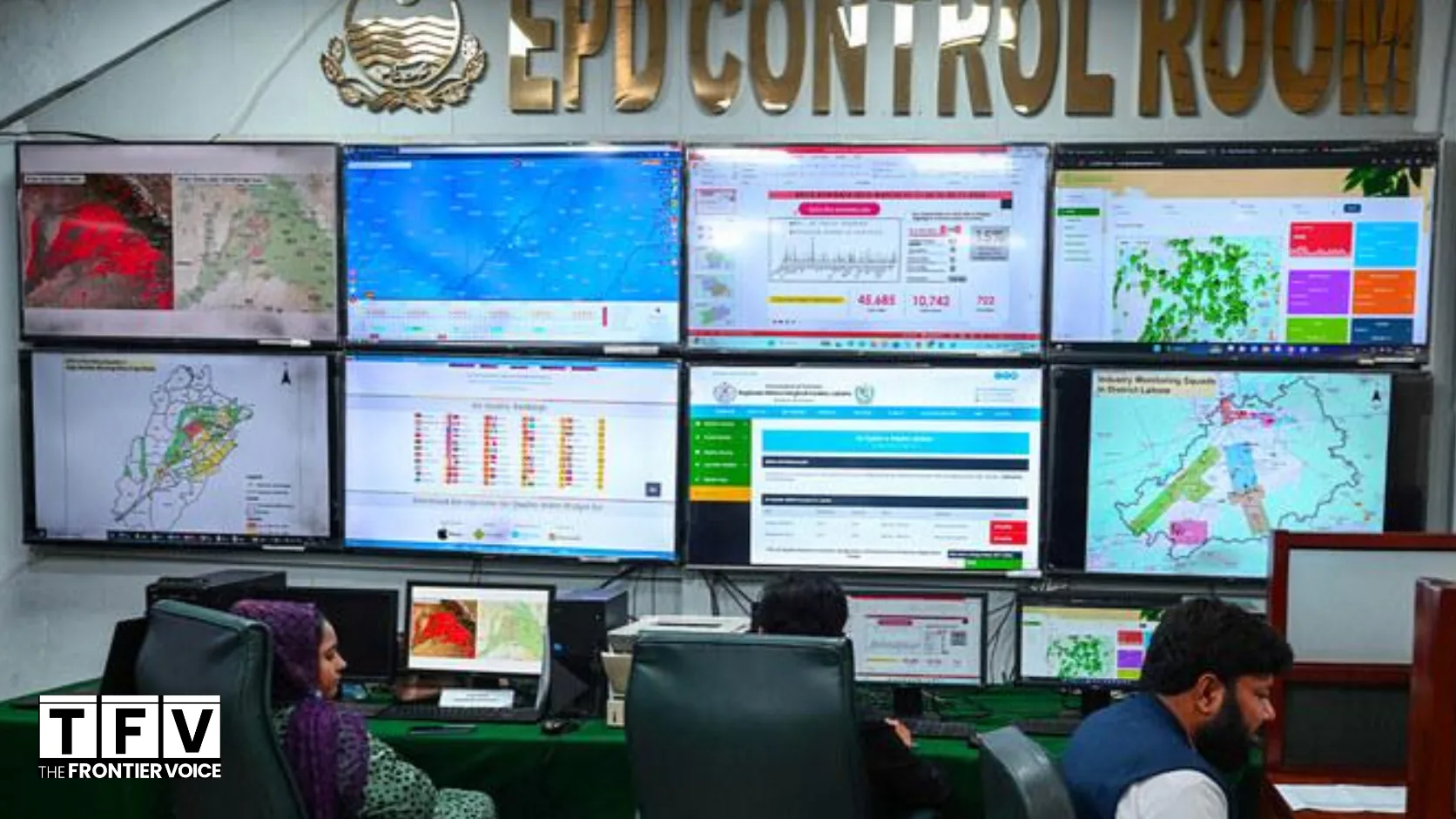
LAHORE: Punjab is developing an artificial intelligence-powered climate observatory designed to monitor environmental conditions in real time, in a project officials say could strengthen the province's ability to respond to climate-related disasters.
Chief Minister Maryam Nawaz Sharif described the under-construction Punjab Climate Observatory as a significant step in the province's efforts to address climate change. In a statement published on Sunday, she said the facility would monitor air quality, water, soil and weather conditions through an AI-powered climate intelligence system.
The project is expected to support weather forecasting, early warning systems and flood prediction. These capabilities are particularly important for Pakistan, where extreme rainfall, flooding, heatwaves and deteriorating air quality have repeatedly affected communities, agriculture and infrastructure.
According to the information published by Dawn, the observatory project was approved in May 2025 following a review of its feasibility plan. The assessment covered budget requirements, equipment procurement and land acquisition. The University of Engineering and Technology in Lahore also submitted a report examining the project's technical aspects.
The facility is expected to include environmental data resources and research laboratories. These could provide opportunities for young scientists and researchers to study climate patterns and develop solutions suited to local environmental conditions.
Artificial intelligence can help analyse large volumes of environmental information, identify patterns and support forecasting models. However, the accuracy of such systems depends heavily on the quality of the data, the reliability of monitoring equipment and the expertise of the people interpreting the results.
The observatory is also expected to contribute to wider environmental planning, including water conservation, climate-resilient agriculture, forest protection and disaster preparedness.
For farmers, more reliable weather information could improve decisions about planting, irrigation and harvesting. For urban communities, better monitoring could support responses to air pollution and extreme weather. For disaster management agencies, timely warnings could provide additional time to prepare evacuations and emergency services.
The project also raises an important question about implementation. An advanced observatory alone cannot prevent floods or reverse environmental degradation. Its information must be shared with relevant departments and translated into practical decisions.
If successfully developed and integrated into public planning, the facility could become an important part of Punjab's climate adaptation infrastructure.