
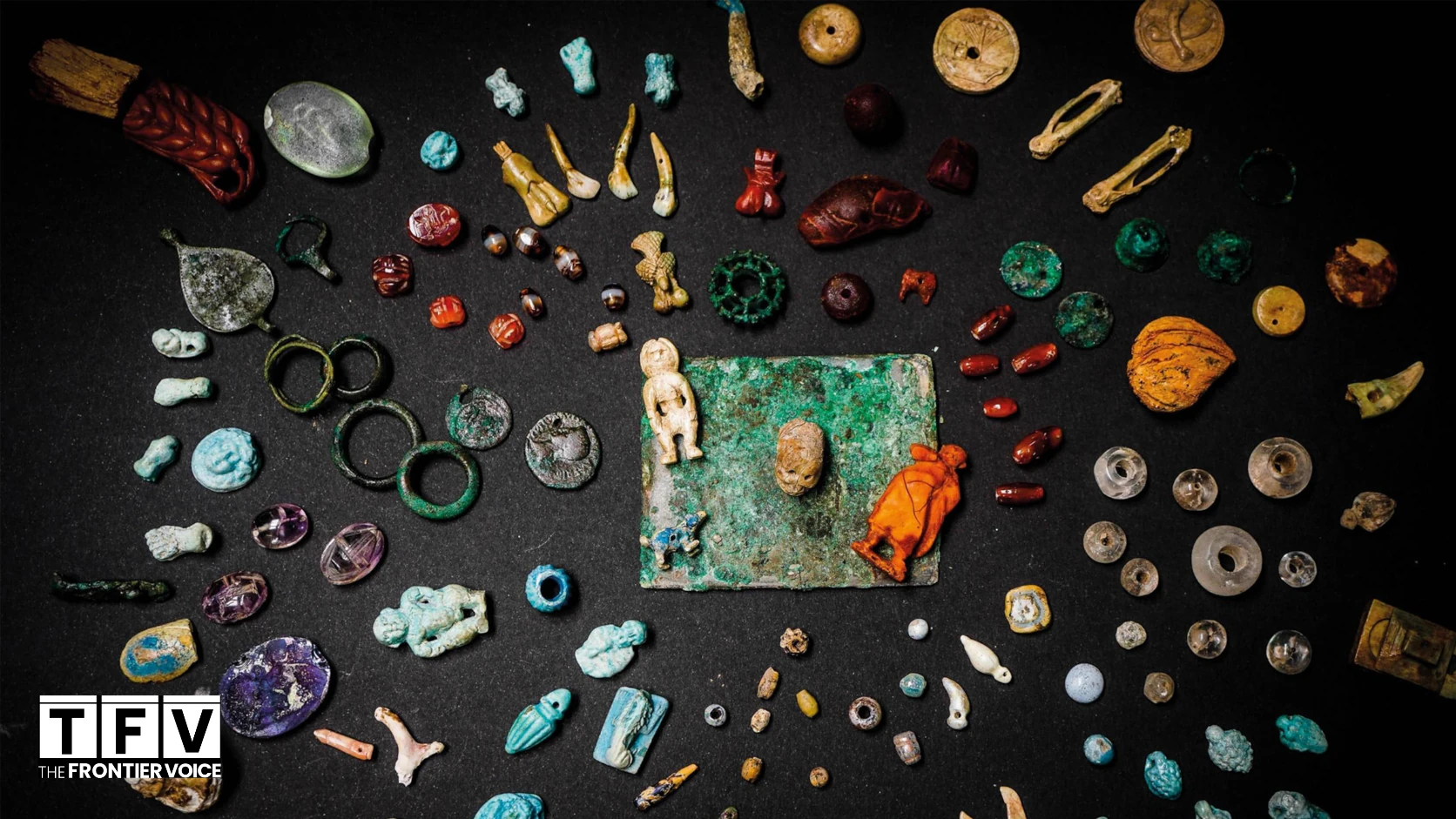
Archaeologists working in the ancient Roman city of Pompeii have uncovered a collection of personal belongings that had remained hidden for nearly 2,000 years.
The discoveries include a perfume bottle, makeup tools, coins, jewellery and a child's necklace, all found inside a wooden storage cabinet in a Roman home.
The house was located along Via dell'Abbondanza, once one of Pompeii's busiest streets.
Pompeii was buried under volcanic ash and debris when Mount Vesuvius erupted in AD 79. The disaster destroyed much of the city but also preserved buildings, objects and everyday belongings beneath layers of volcanic material.
The newly discovered objects offer an intimate glimpse into domestic life before the eruption.
Rather than revealing a royal treasure or a military collection, the cabinet contained items that appear to have belonged to an ordinary household.
Among the most interesting objects were a small perfume container, personal grooming equipment, coins and jewellery associated with a child.
The discovery is significant because archaeological research often focuses on monumental buildings, political figures and wealthy families. Everyday objects can provide a different perspective, helping researchers understand how ordinary people lived, dressed and cared for their families.
The collection also offers clues about Roman beauty practices, household organisation and personal possessions.
Archaeologists are continuing to study the objects to establish their precise use and historical context.
For researchers, the discovery is more than a collection of ancient artefacts. It is a rare opportunity to explore the personal belongings of people whose lives were suddenly interrupted by one of history's most famous volcanic disasters.