
Astronomers have discovered an extraordinary pair of supermassive black-hole-powered quasars that existed just 900 million years after the Big Bang, challenging existing ideas about how quickly such enormous objects could form.
The discovery was made using observations from NASA's James Webb Space Telescope and the Gemini North telescope in Hawaii.
The system has been named Nāpōwawāʻenakaulua and is officially designated J1602+4228AB.
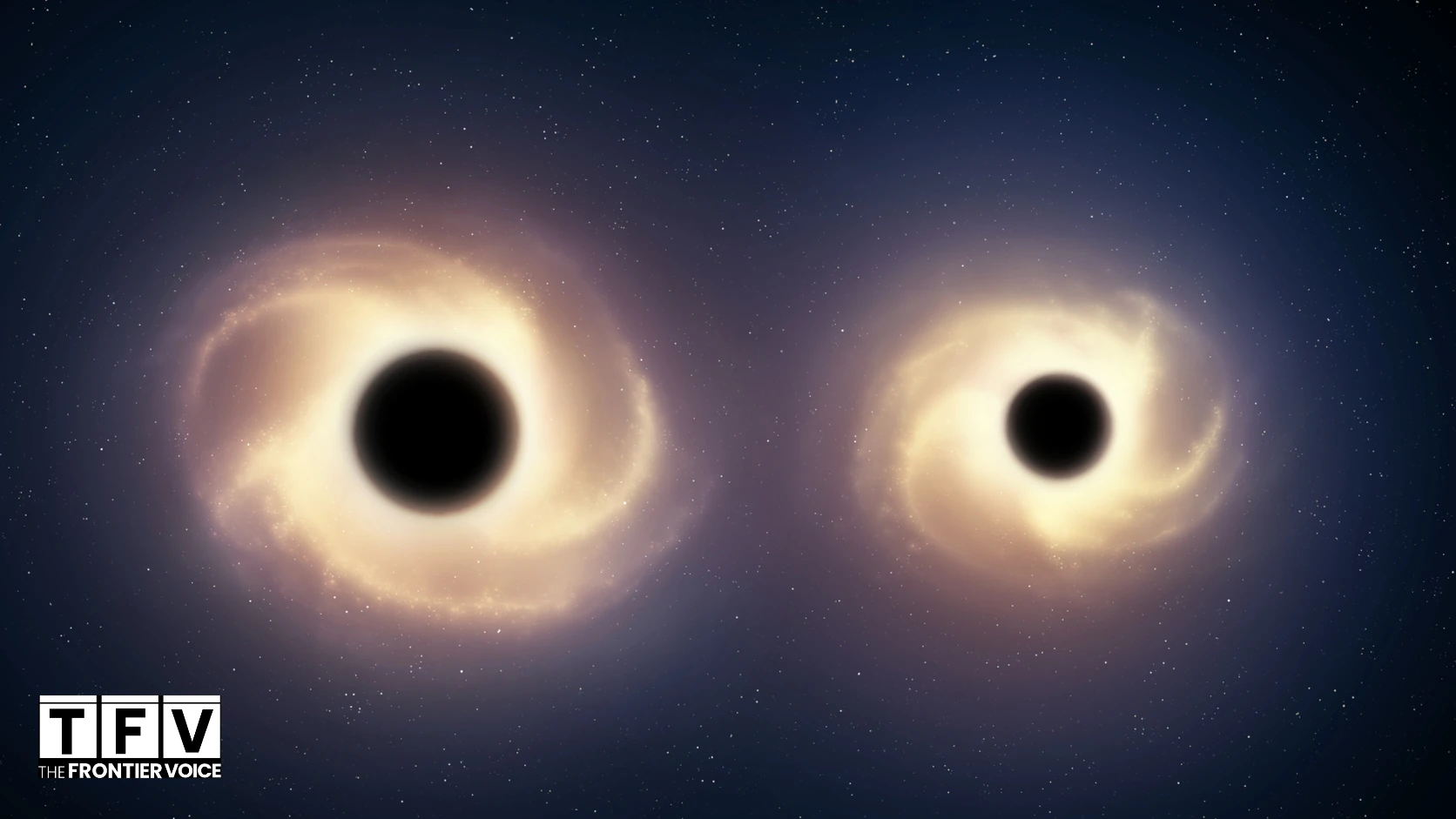
The two objects are quasars, extremely bright galactic centres powered by supermassive black holes consuming surrounding gas and dust. As this material falls towards the black holes, it becomes extremely hot and releases enormous amounts of energy.
What makes this system particularly remarkable is the size of its black holes.
Researchers estimate that one has a mass approximately 1.5 billion times that of the Sun, while the other is around 400 million times as massive.
Despite their enormous size, the two black holes are separated by only about 18,100 light-years. This is roughly one-fifth of the diameter of the Milky Way.
The discovery is significant because the pair existed when the universe was only about 900 million years old.
According to conventional theories, supermassive black holes require considerable time to grow by consuming surrounding material and merging with other black holes.
Finding two such massive objects at such an early stage raises questions about how the first generations of black holes developed.
Scientists believe the system may provide valuable evidence about the formation of early galaxies and the evolution of the universe during a period known as Cosmic Dawn.
The observations also demonstrate the growing importance of the James Webb Space Telescope in investigating objects from the earliest stages of cosmic history.
Researchers hope that further studies of this unusual system will help explain how the universe produced some of its largest and most energetic structures so early in its existence.