

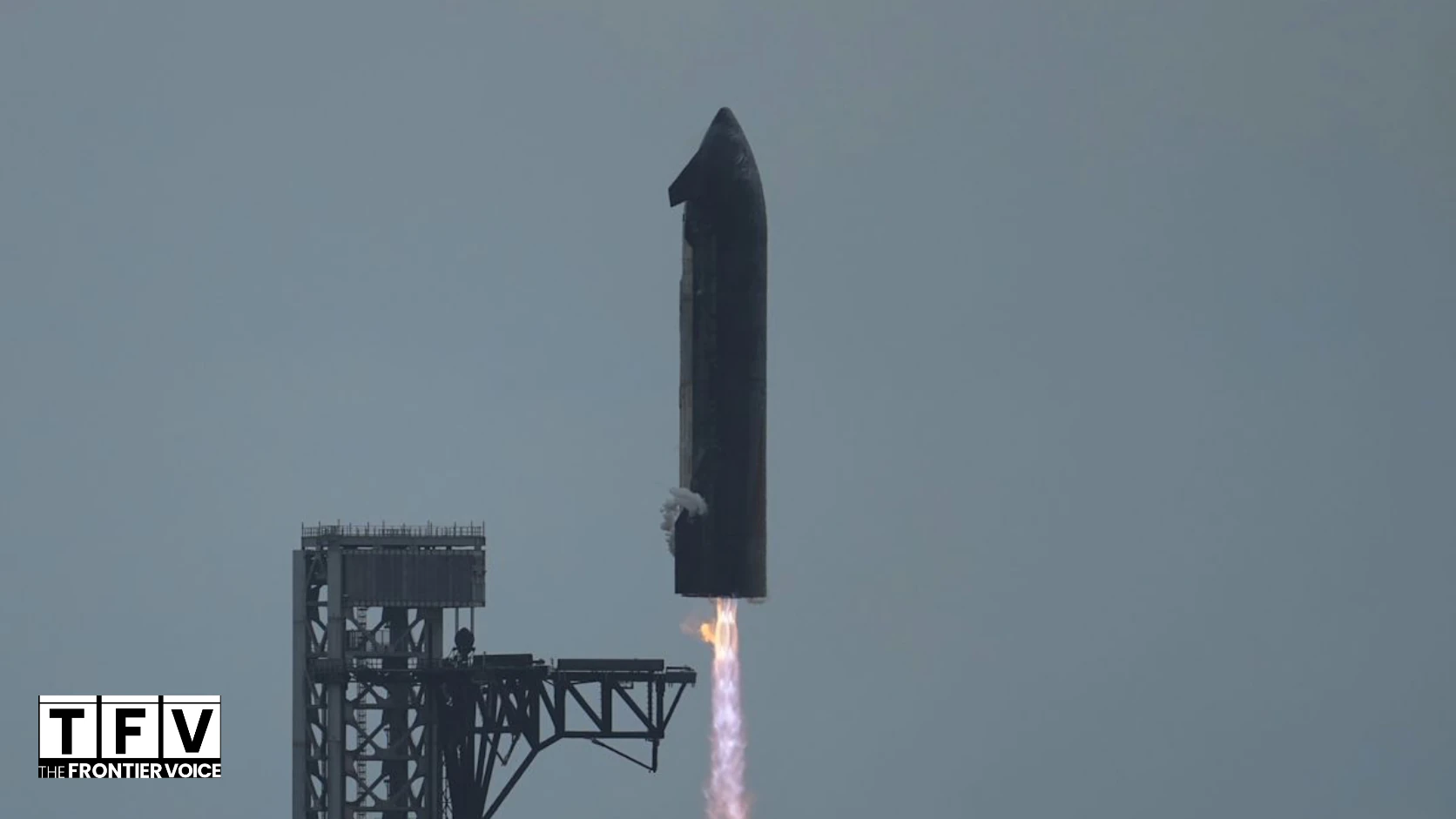
SpaceX has achieved a major milestone in space exploration after successfully catching its Starship spacecraft with giant mechanical arms as it returned from space to its Texas launch site.
The historic operation took place on November 14 at SpaceX's Starbase facility following the spacecraft's 15th test flight.
Standing approximately 124 metres tall, Starship is the world's largest and most powerful rocket system. The spacecraft spent around 22 hours in space before returning to Earth and performing a controlled descent towards its launch tower.
The most remarkable part of the operation was the use of two enormous mechanical arms, popularly known as chopsticks, installed on a structure called Mechazilla.
As Starship approached the tower, it slowed down, turned upright and positioned itself between the mechanical arms, which successfully caught the spacecraft in mid-air.
The mission also involved deploying 26 next-generation Starlink V3 satellites into low Earth orbit.
However, the flight was not entirely successful. The Super Heavy booster experienced a problem during its return and aborted the planned tower catch, eventually splashing down in the Gulf of Mexico.
Despite the booster setback, successfully recovering the Starship upper stage marked an important step towards SpaceX's long-term goal of developing a fully reusable launch system.
Traditional rockets often discard expensive components after launch. SpaceX aims to recover both major stages, inspect them and prepare them for future missions.
The technology could eventually reduce launch costs, increase the frequency of space missions and make large-scale satellite deployment more affordable.
NASA is also relying on Starship technology as part of its plans to return astronauts to the Moon.