

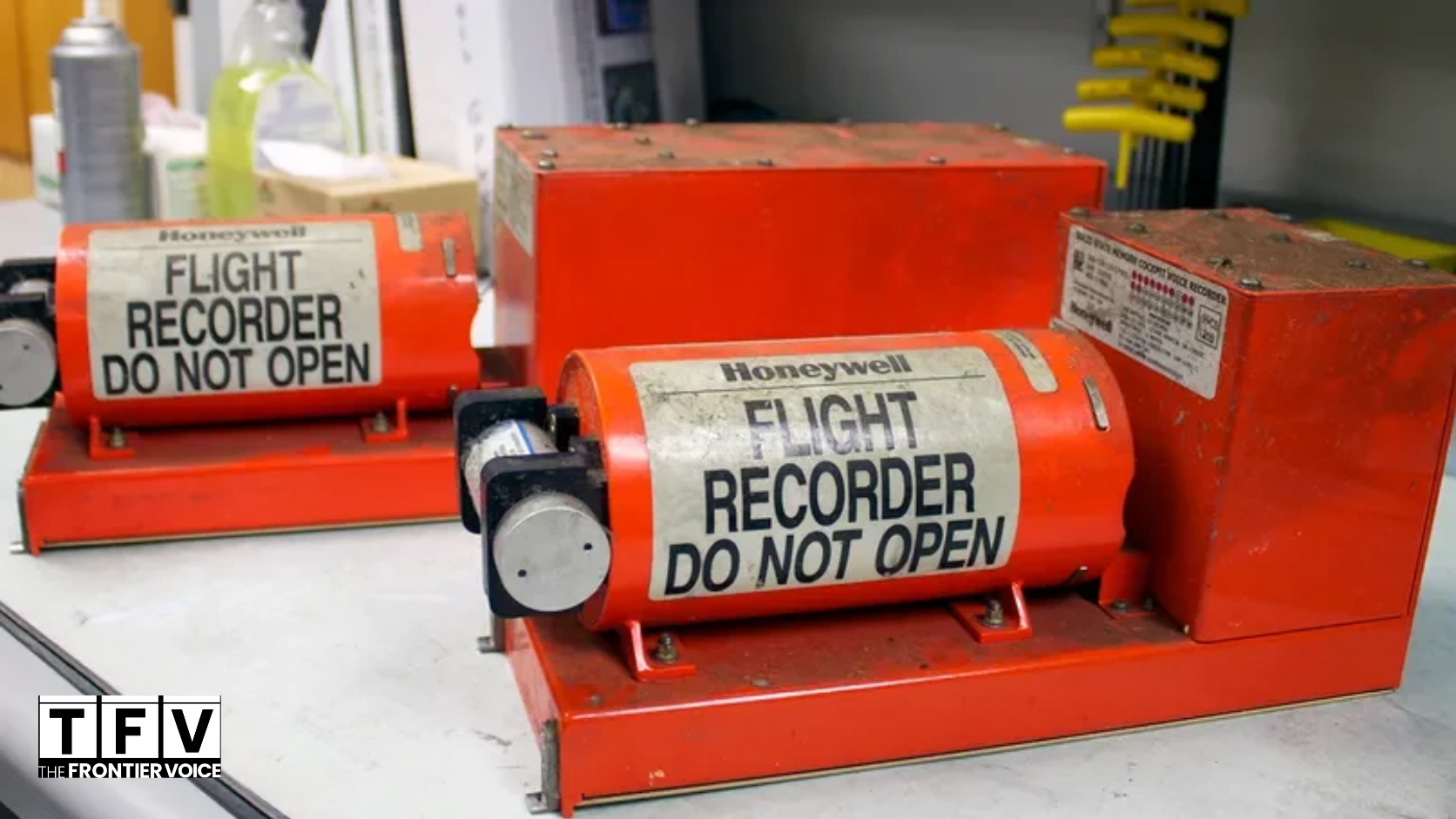
Today, the black box is one of the most important tools used to investigate aviation accidents. But few people know that the idea behind this life-saving technology emerged after a series of mysterious aircraft crashes in the 1950s.
In 1954, the de Havilland Comet, the world's first commercial jet-powered passenger aircraft, suffered two catastrophic mid-air accidents. The aircraft broke apart during flight, leaving aviation experts struggling to understand what had gone wrong.
The investigations highlighted a major problem: there was no reliable recording of the aircraft's technical performance or the conversations taking place inside the cockpit. Investigators had limited information to establish exactly what had happened before the aircraft broke apart.
These events helped inspire Australian scientist David Warren to consider a device that could record cockpit conversations and important flight information.
Working at Australia's Aeronautical Research Laboratories, Warren developed the concept of a flight recorder. His work laid the foundation for the modern aircraft black box, a technology that would later become an essential part of aviation safety.
Modern aircraft generally carry two main types of flight recorders. The Flight Data Recorder (FDR) stores information about the aircraft's speed, altitude, direction and other technical parameters. The Cockpit Voice Recorder (CVR) captures conversations between pilots and other sounds inside the cockpit.
Today, information recovered from these recorders plays a crucial role in aviation accident investigations. It helps investigators reconstruct the final moments of a flight, identify technical failures and understand the circumstances that led to an accident.
What began as an idea inspired by the tragic Comet disasters eventually became one of the most significant safety innovations in aviation history.
David Warren is widely recognised as the pioneer of the modern aircraft black box concept.