
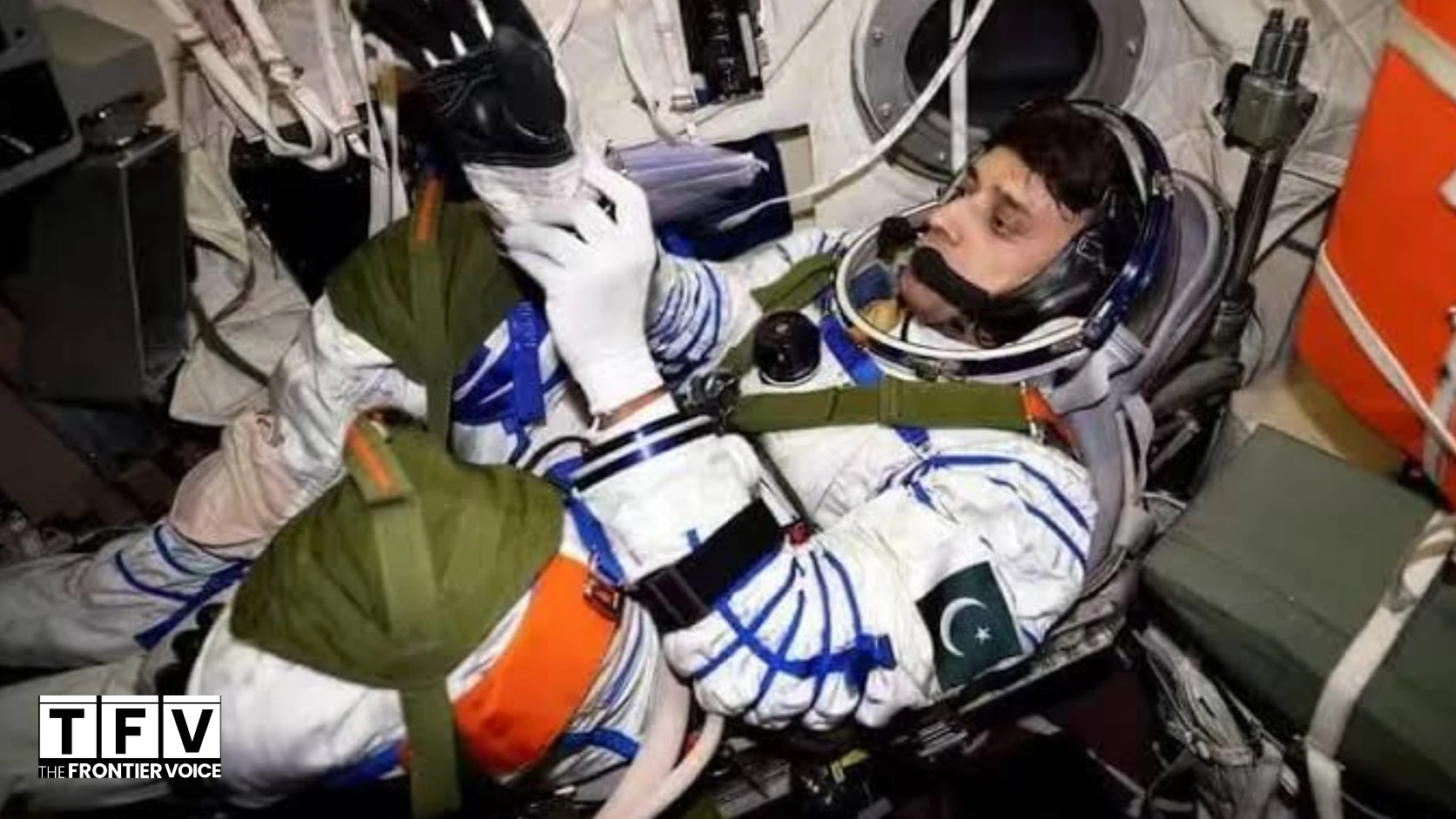
Pakistan has reached a major milestone in its space ambitions after astronaut Muhammad Zeeshan Ali joined China's Shenzhou-24 mission and reached the Tiangong space station.
The mission marks a significant development in Pakistan's human spaceflight history and reflects growing cooperation between Islamabad and Beijing in scientific research and space technology.
According to reports, Shenzhou-24 carried three astronauts, including Ali and two Chinese crew members. The spacecraft launched from China's Jiuquan Satellite Launch Centre and successfully docked with the space station.
The crew is expected to undertake scientific experiments, station maintenance and research activities during the mission. Pakistan's participation also highlights the expanding international role of China's space programme.
For Pakistan, the achievement goes beyond symbolic representation. Human spaceflight requires extensive training, scientific expertise, advanced technology and international coordination. Participation in such a mission may create opportunities for future cooperation in satellite development, aerospace engineering, scientific research and technology education.
The mission could also inspire young people in Pakistan to explore careers in science, robotics, astronomy and engineering—fields that will increasingly influence the country's economic and technological future.
As countries expand their space programmes and partnerships, Pakistan's participation in the Shenzhou-24 mission represents an important step in its scientific ambitions and international cooperation.