
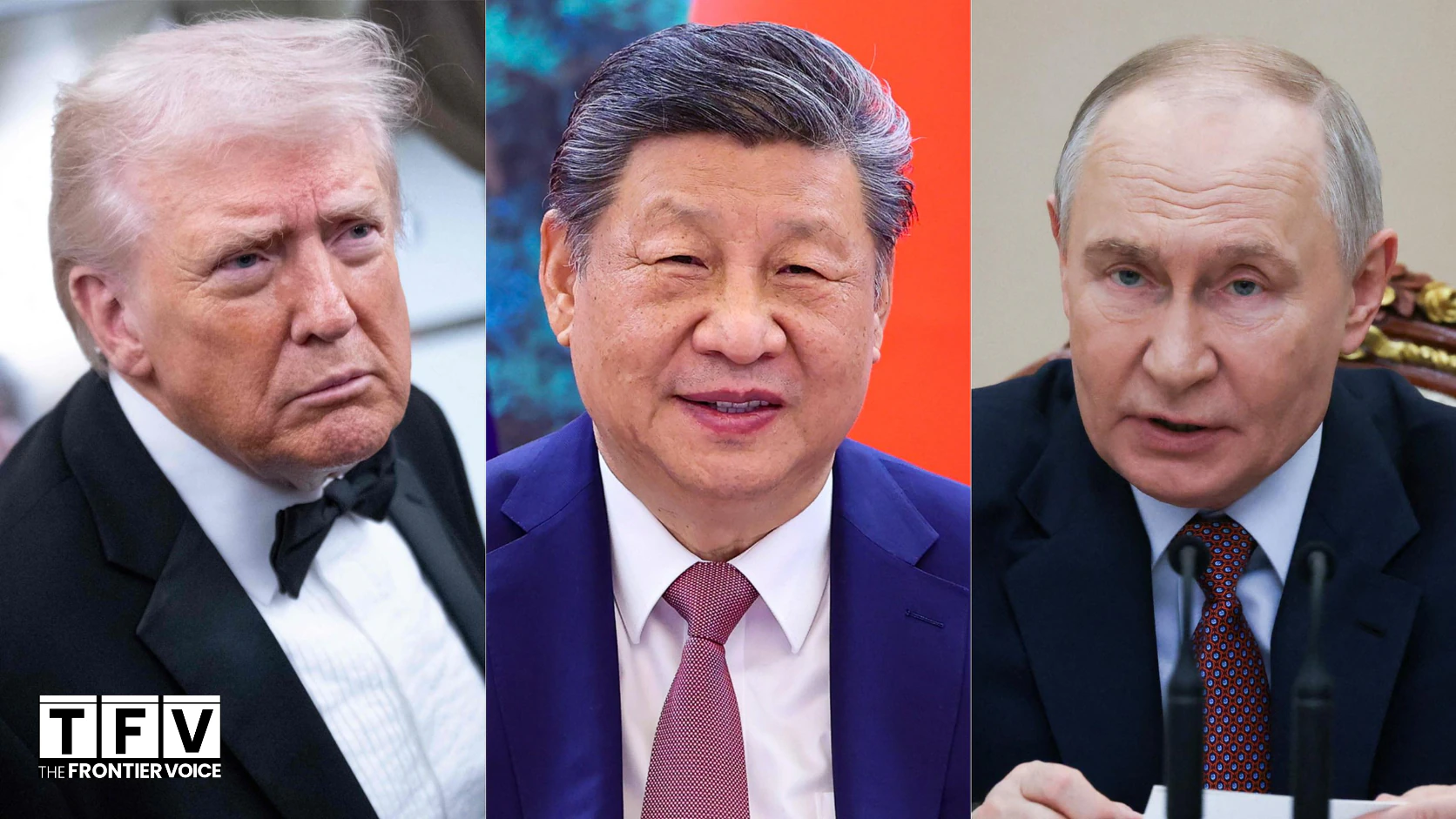
The leaders of three of the world's most influential powers are preparing for a high-profile meeting on the sidelines of the Asia-Pacific Economic Cooperation summit in Shenzhen, China, with trade, security and international conflicts expected to dominate discussions.
US President Donald Trump, Chinese President Xi Jinping and Russian President Vladimir Putin are expected to meet as tensions remain high over global trade, the war in Ukraine, the Middle East conflict and competition over advanced technology.
The diplomatic gathering comes at a time when relations between Washington and Beijing remain complicated by tariffs, restrictions on semiconductor exports, artificial intelligence competition and concerns over supply chains. Russia continues to face Western sanctions related to its war in Ukraine, while Moscow is seeking to strengthen its political and economic relationships across Asia.
Xi used his APEC remarks to advocate open trade, greater market access and regional economic cooperation. Putin criticised Western sanctions and trade restrictions, arguing that the Asia-Pacific region is becoming increasingly important to Russia.
The anticipated trilateral discussion could touch on Ukraine, Iran, nuclear weapons, trade arrangements and technology governance. However, observers caution that a meeting between the leaders does not automatically mean major agreements will emerge, as their countries continue to hold sharply different positions on several issues.
The meeting nevertheless carries significance because decisions made by Washington, Beijing and Moscow can influence global markets, security arrangements, energy supplies and the diplomatic position of countries that are not directly involved in the talks.
Smaller nations will be watching closely to see whether the meeting produces cooperation—or simply another round of competing geopolitical narratives.