

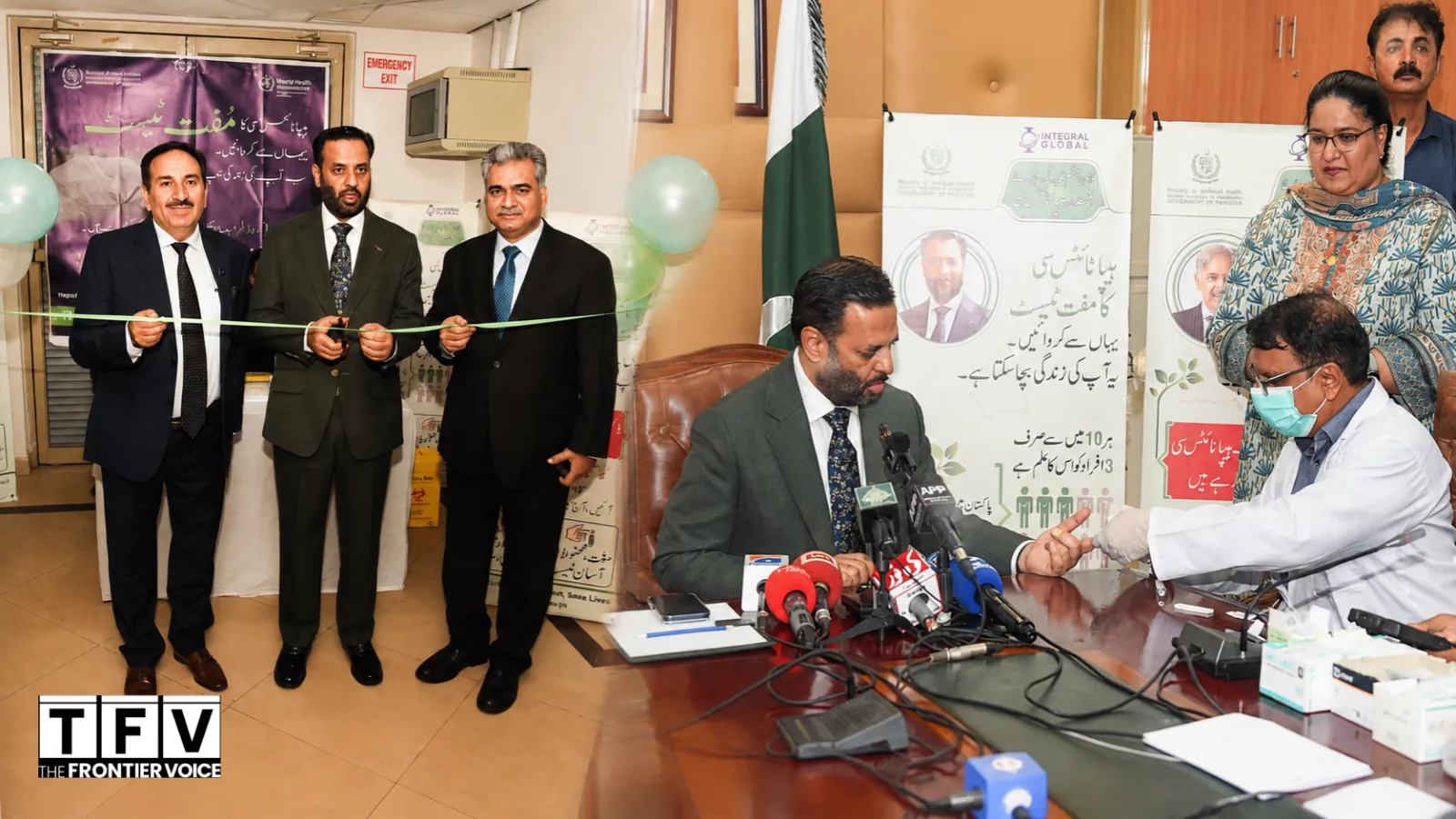
ISLAMABAD: Federal Minister for Health Syed Mustafa Kamal inaugurated a Hepatitis C screening initiative for officers and employees of the Ministry of National Health Services, Regulations and Coordination by getting himself screened first, setting an example for ministry staff and the wider public.
Speaking at the launch, the Federal Minister said the government, under the Prime Minister’s programme for the elimination of Hepatitis C, is working to ensure screening of every person aged 12 years and above across Pakistan.
He announced that Hepatitis C screening would be mandatory for all employees of the Ministry of Health, from the Federal Minister and senior officers to support staff. Letters are also being issued to all attached departments and institutions of the ministry as well as other federal ministries, urging them to ensure screening of their employees.
According to the minister, Islamabad was selected as the starting point of the nationwide initiative because the programme is ultimately intended to cover the entire country. At present, 17 government screening centres are operational in Islamabad.
The government is also engaging private hospitals to expand access to free screening by providing screening equipment and kits and utilizing their human resources to reach a larger population.
Syed Mustafa Kamal said arrangements for screening kits and essential equipment had also been made for Azad Jammu and Kashmir and Gilgit-Baltistan, where screening activities would begin shortly. The provinces are also progressively joining the national campaign.
He said people deported from abroad were being screened at international airports and other important entry and exit points. The programme is expected to expand further over the next two to three months to cover additional locations and population groups.
Highlighting the digital component of the initiative, the minister said the entire screening system had been connected with modern digital technology. Digital tools used by the Pakistan Bureau of Statistics for the national census are being utilized, while screening information is being recorded digitally and in real time. The screening record will also be linked with NADRA data, allowing individuals’ screening information to remain accessible in the future.
The minister said an estimated 11 million people in Pakistan may be living with Hepatitis C, although the actual burden would become clearer once nationwide screening was completed.
He described Hepatitis C as a silent and potentially dangerous disease that can remain undiagnosed until it causes serious liver damage. Untreated infection can lead to severe liver disease and eventually liver cancer. However, he stressed that early diagnosis can lead to effective and complete treatment.
The Federal Minister said the government was providing Hepatitis C treatment completely free of cost, including a three-month course of medicines worth approximately Rs. 34,000. Where medically required, a second course could also be provided, taking the total value of free medicines for an individual patient to approximately Rs. 68,000. Screening is also being provided free of charge.
Sharing his own experience, Syed Mustafa Kamal said he had undergone the screening earlier in the day and, Alhamdulillah, his test result was negative.
He urged citizens of Islamabad to visit their nearest screening centre with their CNIC and get themselves tested, saying the process takes only a few minutes. He also particularly called upon parents to ensure that their children aged 12 years and above, along with other family members, are screened.
The minister emphasized that timely detection is vital not only for protecting individuals but also for safeguarding families and communities from the wider impact of Hepatitis C.
“The government has made screening and treatment available free of cost; now it is the responsibility of the people to come forward and benefit from this opportunity,” he said.