

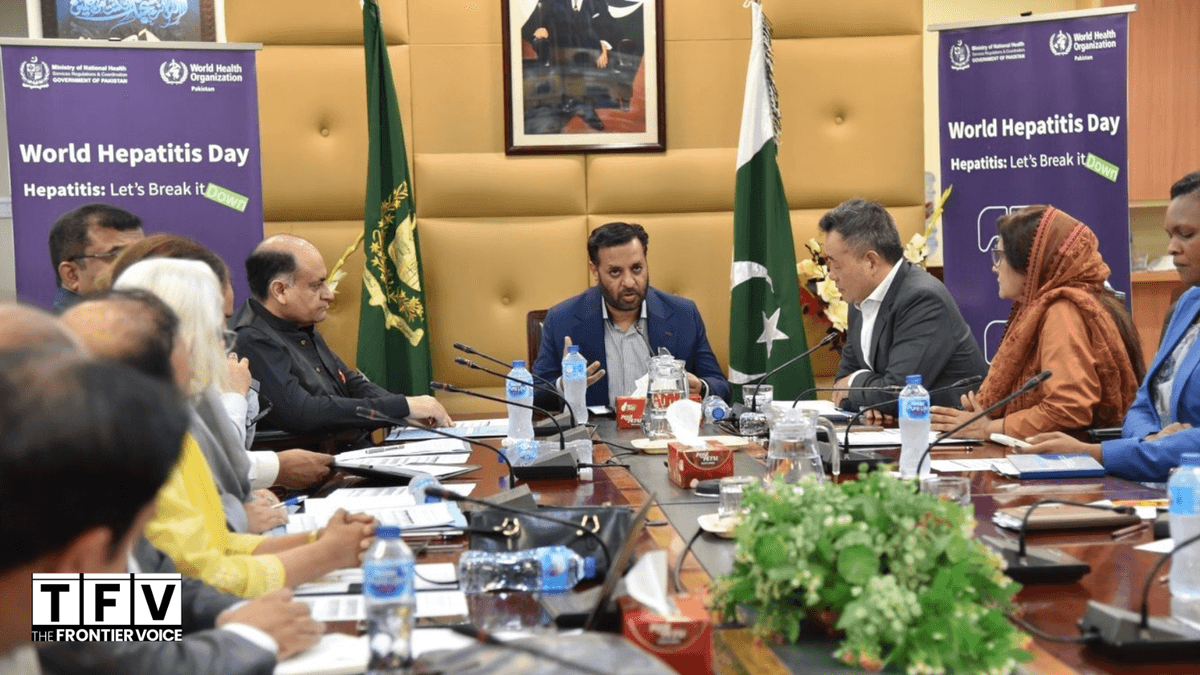
Islamabad: Federal Minister for National Health Services, Regulations and Coordination Mustafa Kamal has declared Hepatitis C a national emergency, calling for immediate and coordinated action to eliminate the disease across Pakistan by 2030.
Speaking on World Hepatitis Day, the minister said Pakistan can no longer afford to lose lives to a disease that is preventable, detectable, and curable. He revealed that more than 10 million Pakistanis are currently living with Hepatitis C, while nearly 110,000 new infections are reported every year, describing the situation as a serious national health challenge.
Mustafa Kamal emphasized that modern antiviral medicines have made Hepatitis C a highly treatable disease, with more than 95% of patients able to achieve a complete recovery through early diagnosis and timely treatment.
Under the Prime Minister's National Hepatitis C Elimination Programme, the government plans to screen over 164 million people in phases across the country. The programme will provide free screening, free diagnostic testing, and a complete three-month treatment course worth approximately PKR 34,000 per patient, with additional treatment also available free of cost if required.
The programme is currently being implemented directly by the federal government in Islamabad Capital Territory, Azad Jammu and Kashmir, and Gilgit-Baltistan, while provincial governments will gradually expand its reach nationwide.
The Health Minister urged citizens to voluntarily visit designated screening centres and take advantage of the government's free testing and treatment services.
He also announced that the government is preparing legislation to make screening for HIV, Hepatitis B, Hepatitis C, and other major infectious diseases mandatory before surgeries and other invasive medical procedures in both public and private healthcare facilities.
Highlighting the government's broader healthcare vision, Mustafa Kamal said Pakistan must focus not only on treating diseases but also on preventing them. He stressed that strengthening maternal and child health, routine immunization, nutrition, safe drinking water, environmental health, and primary healthcare is essential for building a healthier nation.
Concluding his address, the minister expressed confidence that, with collective national efforts and public participation, Pakistan can achieve its goal of becoming Hepatitis-free by 2030.