


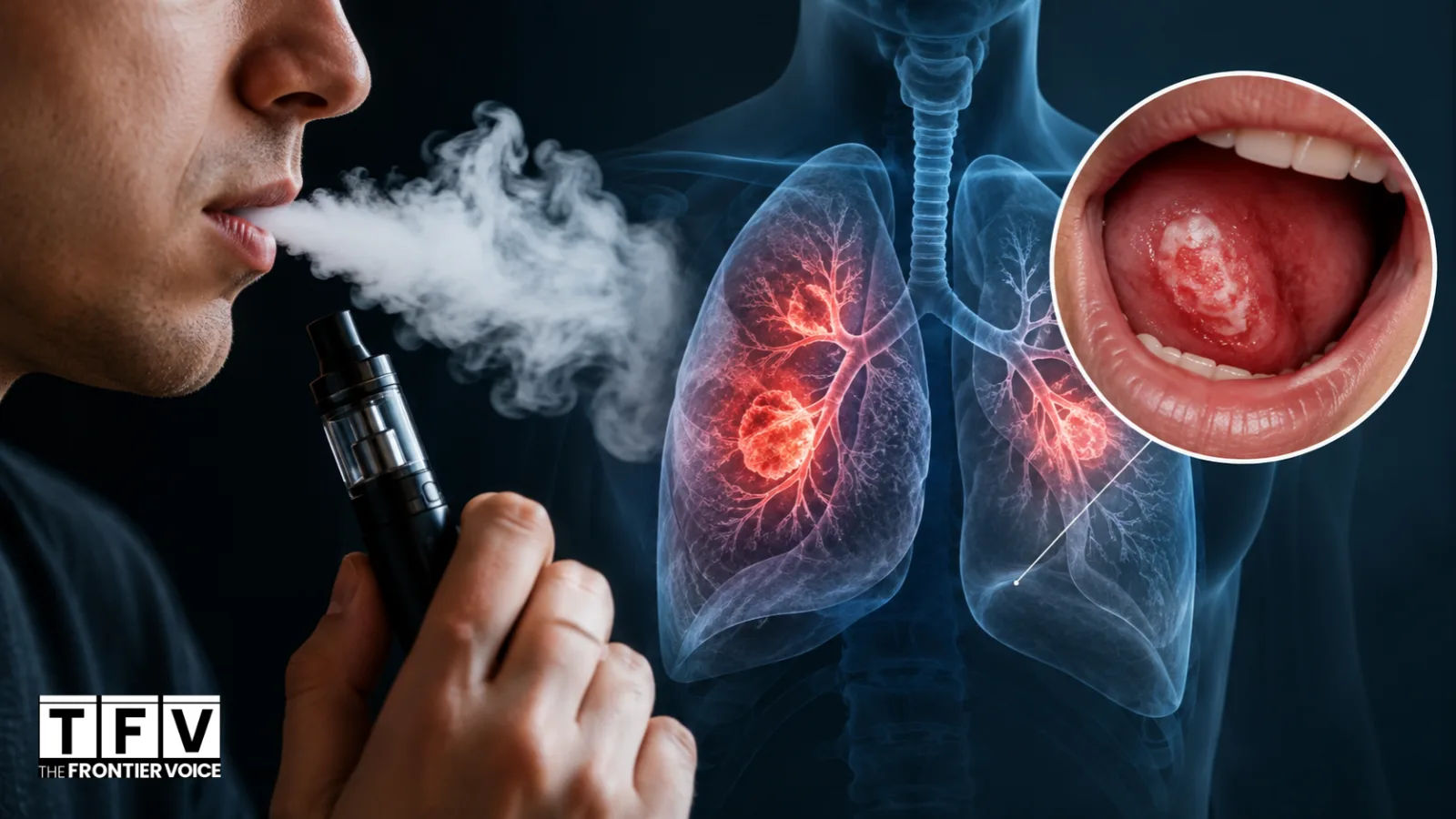
A new study by Australian researchers has raised concerns about a possible link between vaping and early biological changes associated with cancers of the mouth and lungs.
Researchers led by scientists from the University of New South Wales in Sydney reviewed scientific studies, animal experiments, human case reports and laboratory research published between 2017 and 2025. The findings were published in the journal Carcinogenesis.
The researchers found that exposure to nicotine-containing e-cigarette vapor was associated with biological changes that can be linked to cancer development, including DNA damage and increased inflammation.
According to the researchers, inhaling e-cigarette vapor appears to cause changes in cells and tissues in the mouth and lungs. The review also examined cases of people diagnosed with oral cancer who reported vaping but had never smoked conventional cigarettes.
Animal experiments provided additional warning signs. Some studies found that mice exposed to e-cigarette vapor developed a higher number of lung tumors. However, researchers cautioned that findings from animal experiments cannot be directly applied to humans.
Scientists also stressed that there is still insufficient long-term evidence to determine how many people could eventually develop cancer as a result of vaping. E-cigarettes only became widely available after around 2000, meaning researchers have not yet had several decades of human data to fully assess their long-term effects.
The study's authors urged regulators to consider the emerging evidence and introduce preventive measures while longer-term research continues, particularly as vaping becomes increasingly popular among younger people.