


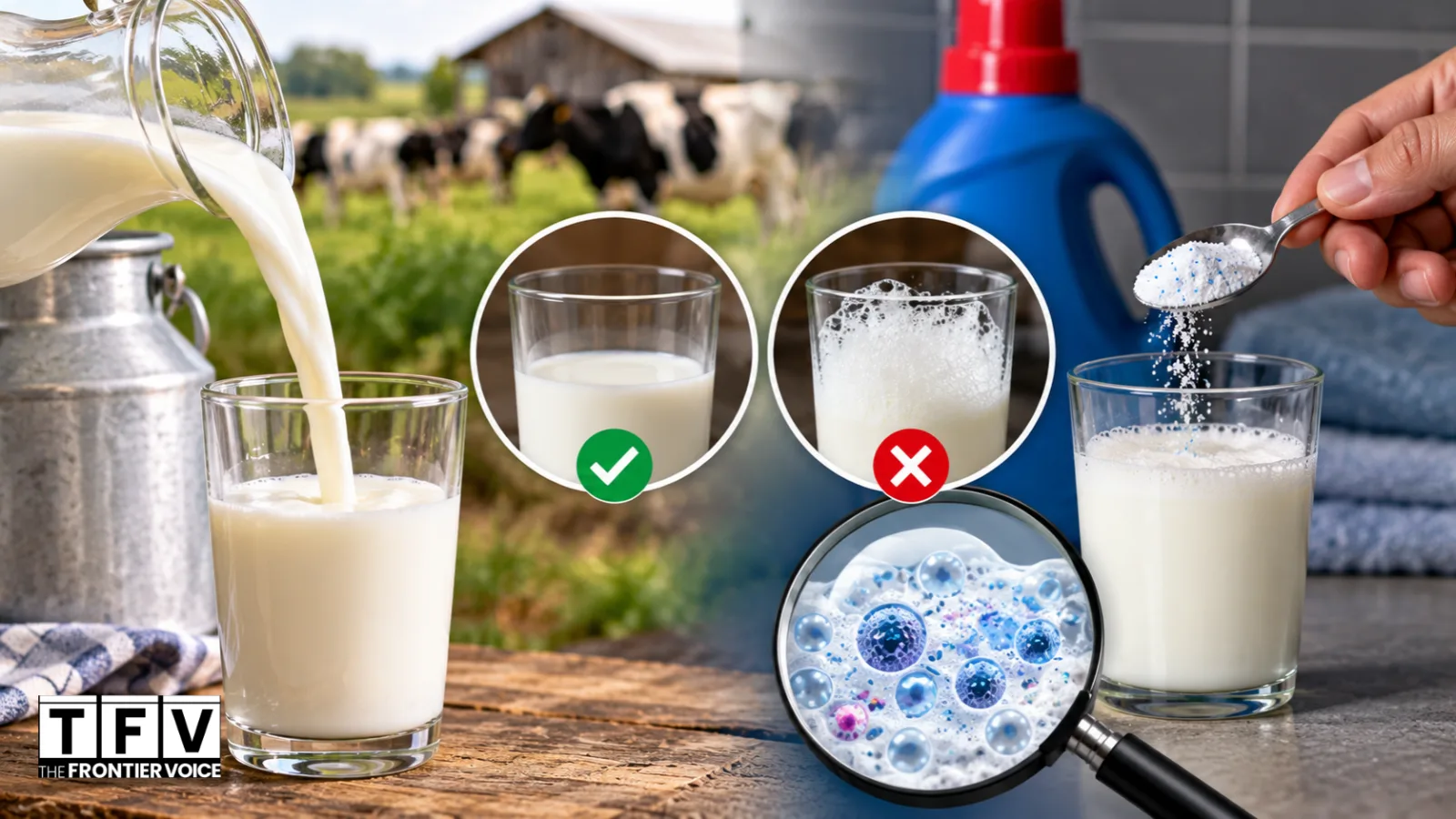
Milk is an important part of the daily diet in many households and is widely used in tea, coffee, yogurt, sweets and other foods. However, concerns over adulteration have made consumers increasingly cautious about the quality and purity of milk.
The Food Safety and Standards Authority of India (FSSAI) has shared a simple home-based method that can provide an initial indication of whether milk may contain detergent or other foaming substances.
According to the method, take around 5 to 10 millilitres of milk in a small glass and shake it vigorously.
If only a small amount of foam appears and disappears quickly, the milk may not show the characteristics associated with detergent adulteration. However, if a large amount of foam forms and remains for a long time, it could indicate the possible presence of detergent or another foaming agent.
Experts explain that detergent can help maintain foam for longer, making diluted or water-added milk appear thicker than it actually is.
Consumers are also advised to buy milk from reliable and reputable sources and carefully check packaging, manufacturing and expiry dates, as well as relevant official certification marks.
However, the foam test should not be treated as a conclusive laboratory test. If adulteration is suspected, the milk should be examined by an authorized food safety authority or a certified laboratory. Consumers are advised to avoid using milk if they have serious concerns about its safety.