
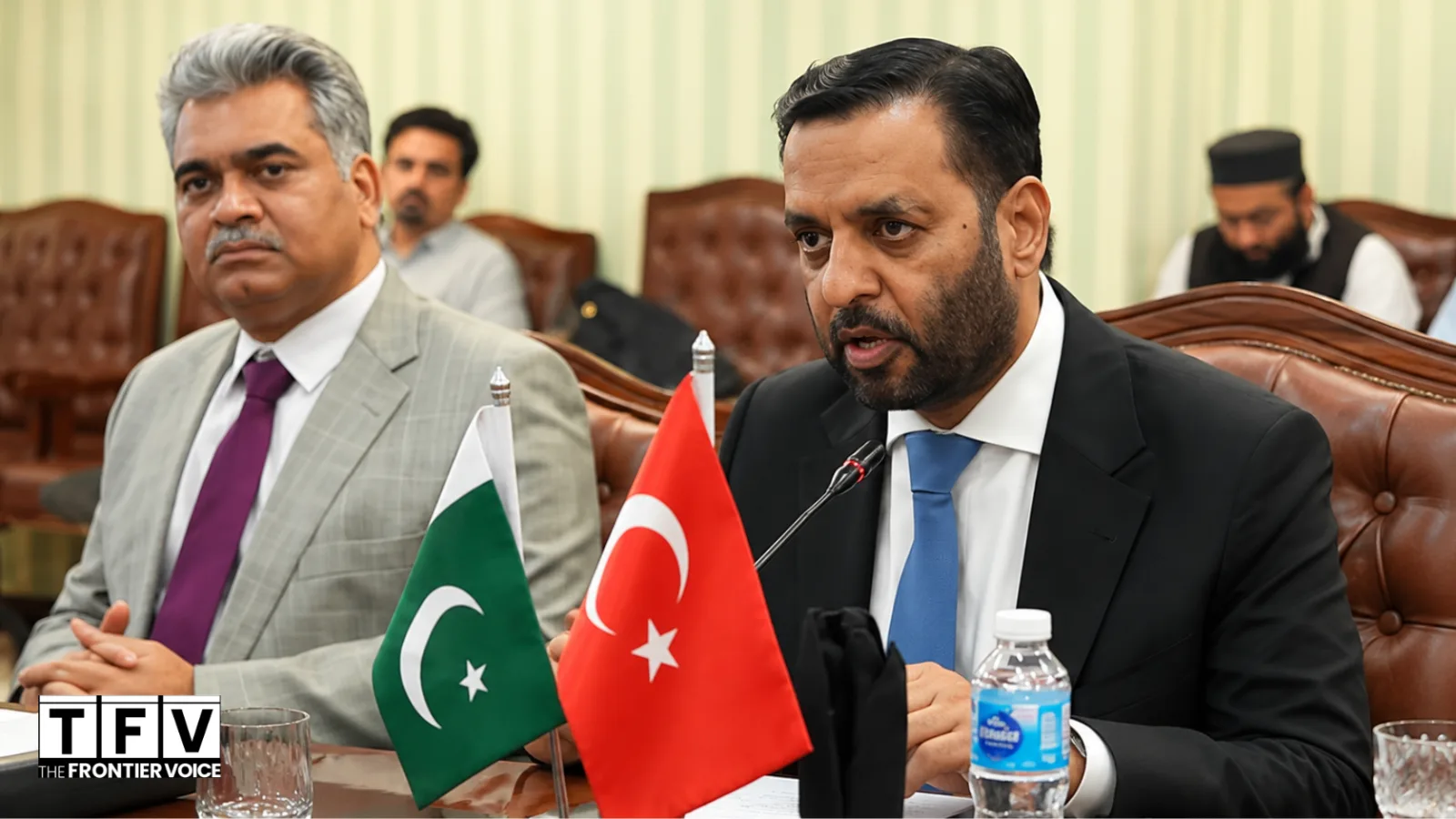
Pakistan and Türkiye have agreed to further strengthen technical cooperation in the health sector, with a high-level Turkish technical delegation visiting Pakistan to explore new areas of bilateral collaboration.
Federal Minister for National Health Services, Regulations and Coordination Mustafa Kamal received the delegation and discussed opportunities for cooperation in vaccine manufacturing, healthcare technology, regulatory systems and capacity building.
The Turkish delegation will assess Pakistan’s existing capabilities and potential for local vaccine production and explore ways to enhance the country’s access to expertise, technology and institutional capacity.
Welcoming the delegation, Mustafa Kamal said Pakistan and Türkiye enjoy longstanding brotherly relations and that Islamabad attaches special importance to expanding cooperation with Ankara in the health sector.
The minister said Pakistan was pursuing a broad agenda focused on achieving greater self-reliance and sustainability in its health system, particularly through the development of domestic vaccine manufacturing capabilities.
He said Pakistan had formulated its first National Vaccine Policy to strengthen vaccine security and reduce the country’s dependence on imported vaccines.
Mustafa Kamal said the government currently provides citizens with 13 types of vaccines free of charge under the national immunization programme. However, none of these vaccines is currently manufactured domestically and all are imported.
According to the minister, Pakistan currently imports these vaccines with the support of international organizations, with the government bearing 51 percent of the cost while international partners cover the remaining 49 percent.
He said international support is expected to phase out completely by 2030/2031, after which Pakistan would have to bear the full cost of its vaccine requirements.
The annual cost of these requirements is estimated at approximately US$1.2 billion, making domestic vaccine production a national priority, the minister said.
Mustafa Kamal also revealed that Pakistan had entered into agreements with an Indonesian biopharmaceutical company for the local production of vaccines, describing the initiative as an important step towards greater self-reliance.
On regulatory reforms, the minister said 90 percent of the Drug Regulatory Authority of Pakistan (DRAP) had been digitized, improving the efficiency and transparency of regulatory processes.
He added that DRAP is expected to achieve WHO Maturity Level 3 by April 2027, which would represent an important milestone for Pakistan's pharmaceutical regulatory system.
The minister also highlighted the need for a comprehensive universal medical record system. He said Pakistan currently lacks a unified medical record for citizens across the country.
Under a new initiative, every citizen's national identity card number will serve as their medical record number, paving the way for a unified and accessible health record system.
The meeting provided an opportunity for Pakistan and Türkiye to identify practical areas for enhanced technical cooperation. Both sides agreed to continue working together by leveraging their respective expertise, technologies and institutional capacities to build a more resilient, sustainable and self-reliant healthcare system in Pakistan.