
By Afzal Shah Yousafzai
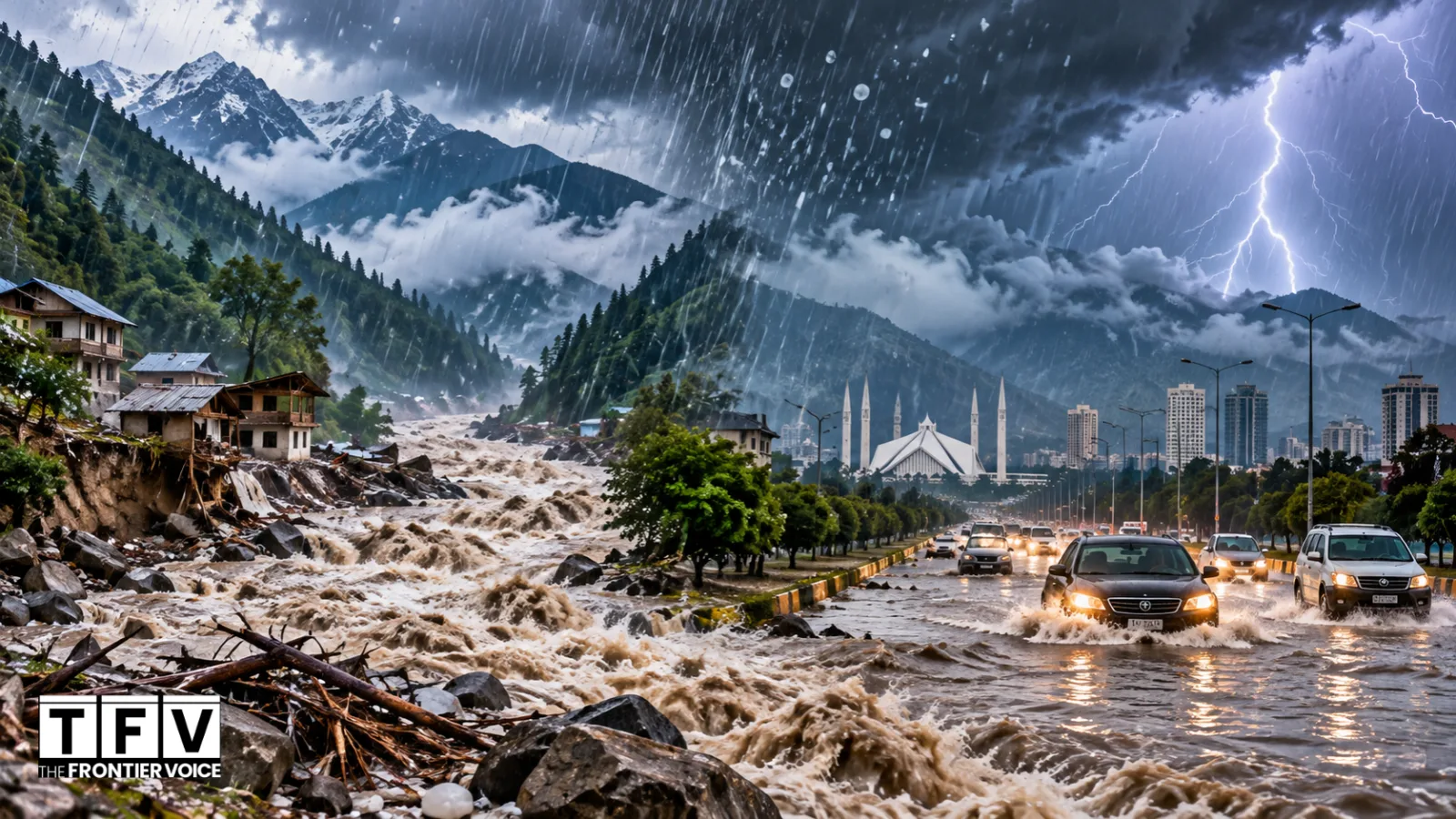
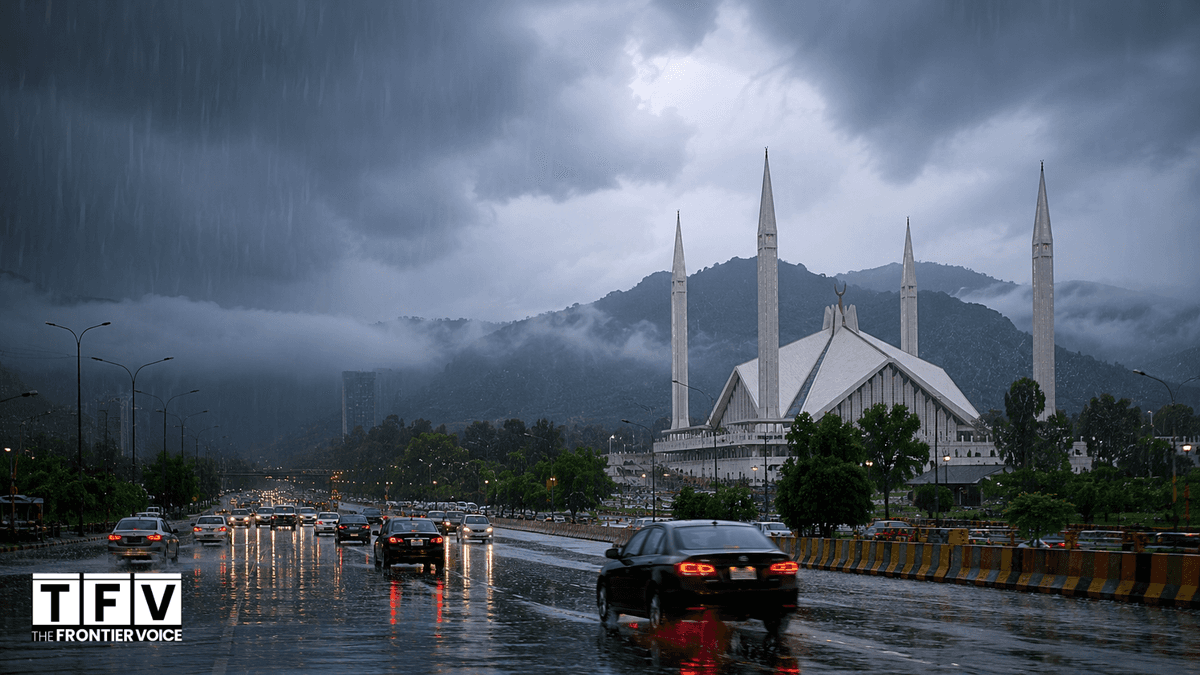
One evening in July, long queues of vehicles stretched across Islamabad's roads. Water had accumulated at several locations from Faisal Avenue to the Islamabad Expressway. Social media was flooded with videos, and people kept asking the same question:
"Is this year's monsoon stronger than usual?"
But if the same question is asked of the meteorological data, the answer is surprising.
According to official rainfall records, Islamabad received 41% less rainfall than the long-term average (1991–2020) between May 1 and July 27, 2026. In other words, the days when the city experienced heavy downpours did not represent the overall monsoon season.
This is not merely a story about reduced rainfall. It is a story of changing weather patterns, urban planning challenges, and a new era of climate change, where the weather may still feel familiar—but it no longer behaves the way it once did.
What the Data Reveals
According to an analysis by Weather Wala, based on data from three automated weather stations in Islamabad, the city recorded an average of 238.7 millimeters of rainfall over an 88-day period this year.
The long-term normal for the same period is 405.5 millimeters, leaving a rainfall deficit of approximately 167 millimeters.
Interestingly, rainfall remained below normal in all three months:
May: 68% below average June: 17% below average July (up to July 27): 44% below average
These figures challenge the common perception that a few heavy rainstorms define an entire monsoon season.
A Changing Rainfall Pattern
Meteorologists say rainfall patterns are changing.
In the past, rain typically fell over several days in moderate spells. Today, however, a single one- or two-hour storm can deliver as much rainfall as several days once did.
Islamabad's rainfall this year reflects exactly this trend.
According to the report, nearly 80% of July's rainfall fell on just five days, while the remaining 22 days were relatively dry.
That is why residents often remember only a few intense rain events and perceive the entire season as unusually wet, even though the total seasonal rainfall remained below average.
One City, Three Different Monsoons
Your experience of this year's monsoon largely depended on where you lived.
If you were near NUST University, the season may have felt relatively dry.
If you lived in Bahria Enclave, however, your experience was entirely different.
According to the report:
Bahria Enclave: 253.2 mm of rainfall G-8/2: 139.8 mm NUST University: Only 90.2 mm
These differences highlight an important reality: rainfall is no longer evenly distributed across modern cities. Even a few kilometers can result in significantly different weather conditions.
How Could There Be So Much Flooding If Rainfall Was Below Average?
This is a perfectly reasonable question.
A simple analogy helps explain it.
Imagine a student who hardly studies throughout the year but spends twelve straight hours studying the night before the exam.
That student cannot claim to have studied consistently throughout the year.
Rainfall works in much the same way.
If extremely heavy rain falls on only a few days while the rest of the season remains dry, the total seasonal rainfall can still end up below average.
Is Climate Change Behind This?
Scientists have warned for years that rising global temperatures are altering rainfall patterns worldwide.
Today, the intensity of rainfall is becoming more significant than the total amount of rainfall.
That is why many cities now experience record-breaking rainfall in a single day while still ending the season with below-average precipitation.
Pakistan is among the countries most vulnerable to climate change.
From the devastating floods of 2022 to recent heatwaves and increasingly erratic rainfall, changing weather patterns are becoming the new normal.
Islamabad's 2026 monsoon provides another local example of this broader global trend.
A Warning for Urban Planning
Lower rainfall does not necessarily mean lower risk.
When most rainfall falls within a few hours, drainage systems can quickly become overwhelmed, roads become flooded, and urban life is disrupted.
At the same time, prolonged dry spells reduce groundwater recharge and negatively affect forests, parks, agriculture, and water reservoirs.
Experts argue that future planning should focus not only on how much rain falls, but also on how the rain falls.
A rapidly expanding city like Islamabad needs more automated weather stations, improved rainfall monitoring, modern drainage infrastructure, and effective rainwater harvesting systems.
If climate change continues to reshape rainfall patterns in this way, cities may increasingly face the dual challenge of urban flooding and water scarcity at the same time.
Islamabad's 2026 Monsoon: A Quiet Warning
It rained—but not enough.
A handful of intense downpours created the impression of an unusually wet season. Yet the overall data shows that Islamabad still received significantly less rainfall than its long-term average.
Perhaps the real question is no longer:
"How much did it rain this year?"
Instead, we should be asking:
"Are we prepared to understand our changing climate—and adapt our cities to the weather of the future?"