

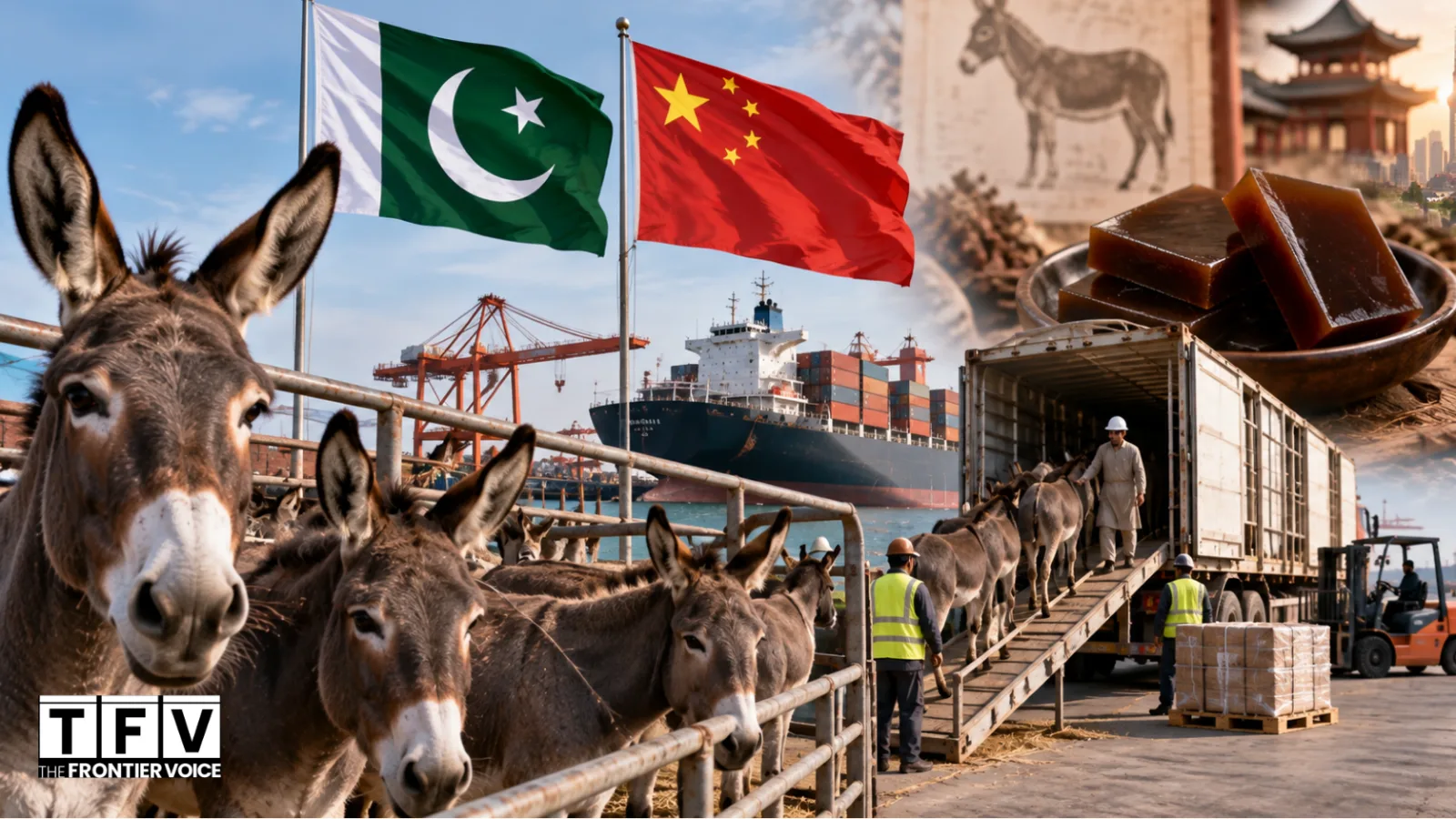
Pakistan is emerging as a new supplier of donkeys and donkey hides to China, where rising demand for Ejiao, a traditional Chinese medicine made from donkey-hide gelatin, is opening a new and unusual export market for the country.
According to a Bloomberg report cited by Business Recorder, China’s domestic donkey population has declined, prompting buyers to look overseas to countries including Pakistan, Brazil and Australia for supplies of donkey hides.
Ejiao is a collagen-rich gelatin-like substance made by processing donkey hides and is widely used in traditional Chinese medicine. The Chinese Ejiao market was estimated at around $7.8 billion in 2021, according to a 2023 US Congressional Research Service report.
Pakistan has an estimated donkey population of more than six million, making it a potential major supplier. Pakistan and China have been working for several years on regulations and infrastructure needed for commercial exports of donkey meat and hides.
In October 2024, the two countries signed a protocol establishing quarantine requirements for the export of donkey meat and hides to China. In May 2026, Pakistan’s Economic Coordination Committee formally approved exports of donkey meat from the Gwadar North Free Zone, subject to the importing country’s regulations.
A Chinese company, Hangeng Group, has established slaughtering and processing facilities near Gwadar and plans to increase its capacity to around 800 donkeys per day.
Company CEO Andy Liao said the business could generate around $5 million in monthly foreign-exchange earnings within six months, potentially increasing to around $7 million per month within two years.
The company says it has invested around $50 million in Pakistan over the past six years, while hundreds of local workers are involved in slaughtering, processing, packaging and transportation.
Pakistan and China have also agreed on a target of around 200,000 donkeys annually for export, covering meat, bones and hides. The sector is projected to generate approximately $375 million to $400 million in annual foreign exchange, according to the report.