


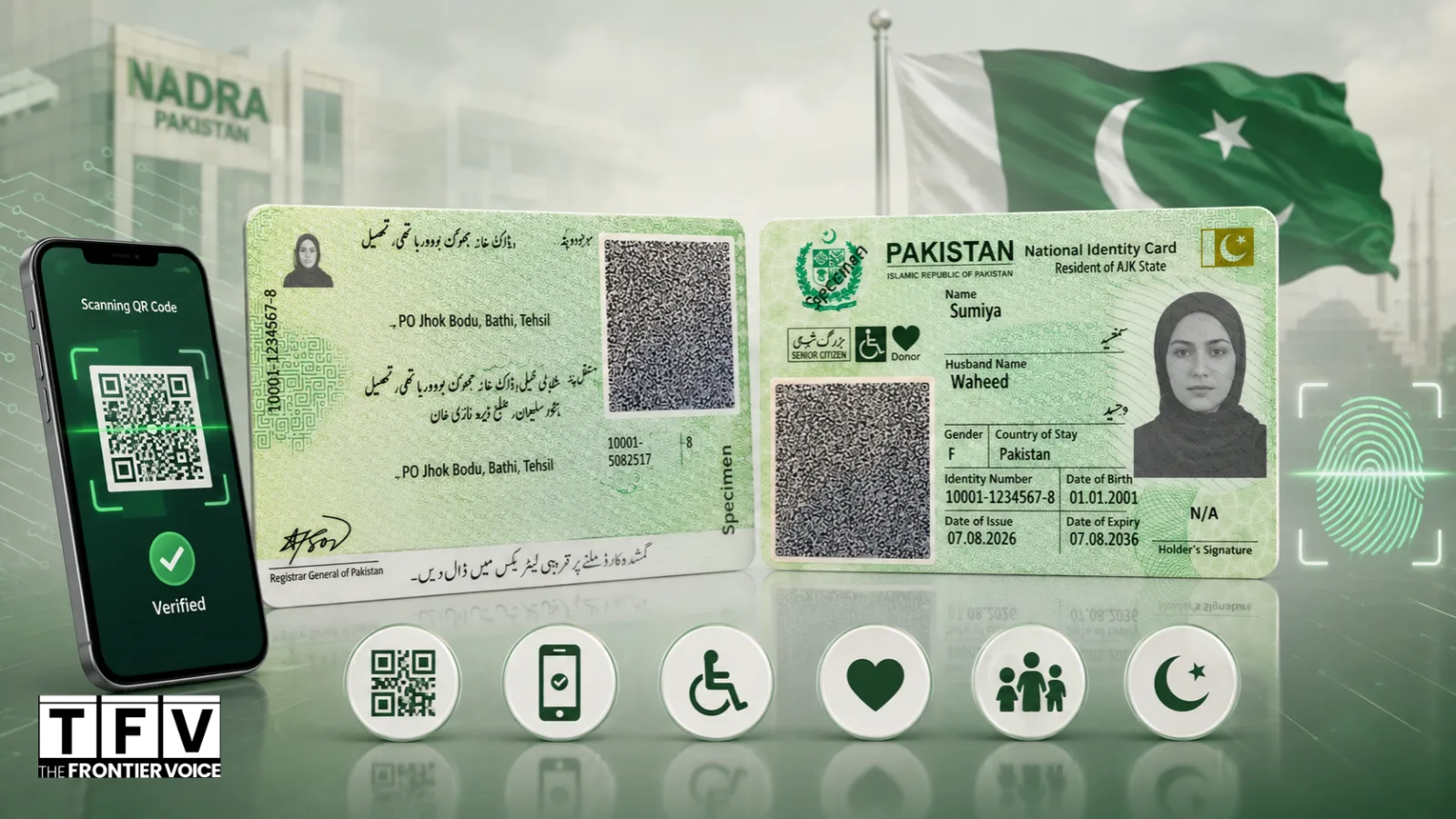
Pakistan’s National Database and Registration Authority (NADRA) has introduced a new QR code-based national identity card, with the phased rollout beginning on August 14, 2026.
Instead of an imported microchip, the new identity card uses a secure QR code that can be scanned and verified through an ordinary smartphone and the Pak ID mobile application.
According to NADRA, the QR code will contain relevant identification information and the cardholder’s photograph, making identity verification easier and helping reduce errors during data entry.
The new card will also carry a family number and special indicators identifying persons with disabilities, senior citizens, organ donors and citizens of Azad Jammu and Kashmir. Names and addresses will be printed in both Urdu and English.
In the first phase, the QR code-based polycarbonate card will replace the existing standard Teslin-based identity card. From January 2027, other identity documents, including NICOP and children’s cards, will gradually be shifted to the new system.
The Pakistan Origin Card (POC) will also be transitioned to the new system in the final phase.
NADRA has clarified that citizens do not need to immediately replace their existing identity cards. Previously issued microchip-based and other identity cards will remain valid until their stated expiry dates.
NADRA said the existing chip-based Smart National Identity Card was introduced around 14 years ago. However, the lack of chip readers and supporting infrastructure meant that many of the facilities linked to the chip could not be utilized as intended.
The new QR-based system is intended to provide easier and more secure digital identity verification while reducing dependence on imported technology and specialized chip-reading infrastructure.