


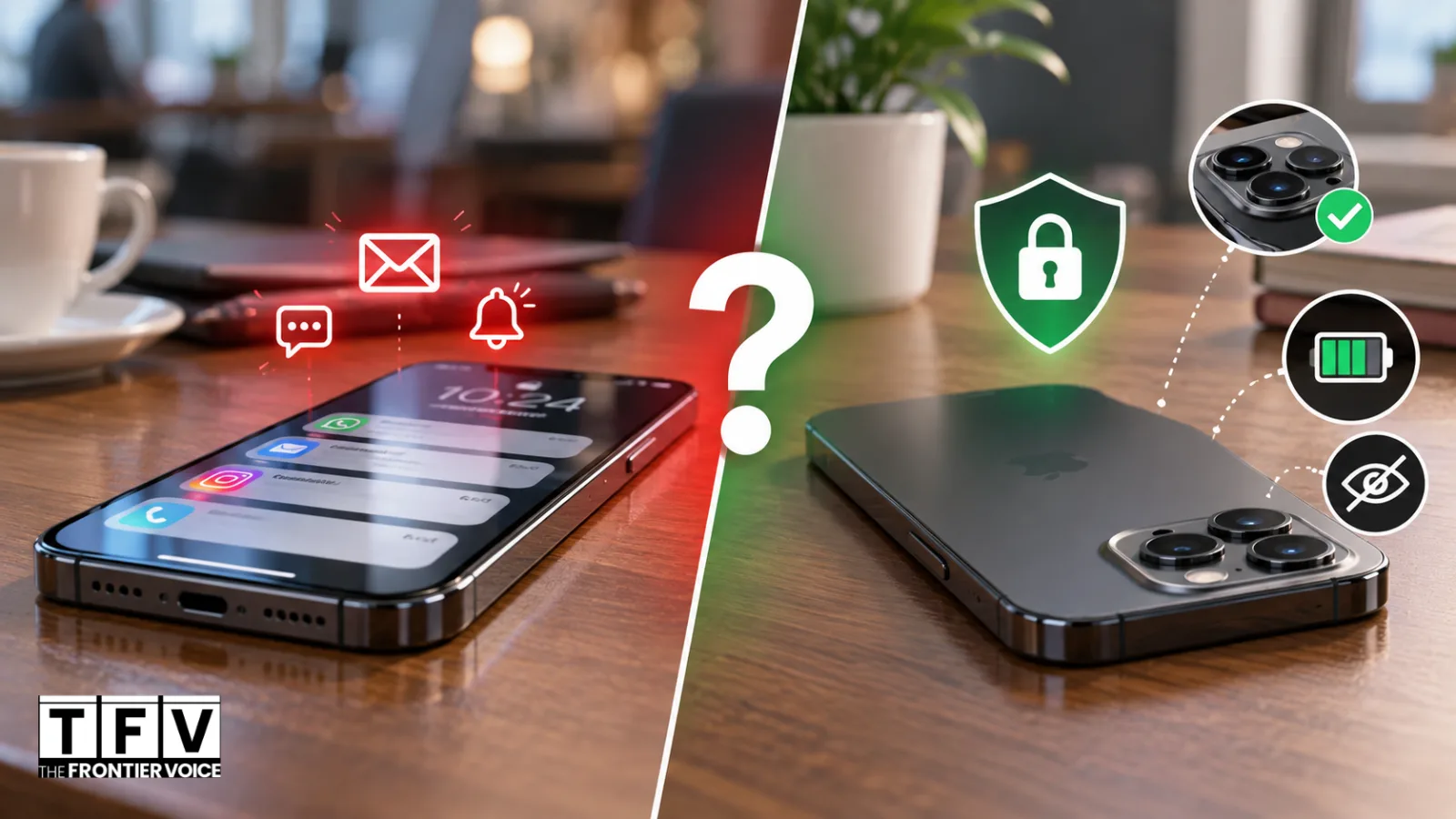
Should you place your smartphone face up or face down when putting it on a table? While it may seem like a simple personal habit, the way you place your phone can affect privacy, camera protection and, in some situations, battery usage.
When a phone is placed screen-up, incoming messages, social media alerts and other notifications can repeatedly light up the display. Apart from causing distractions, this can also expose private messages, banking alerts or other sensitive information to people sitting nearby.
Placing the phone screen-down, on the other hand, can help keep notifications out of sight and reduce visual distractions caused by the display repeatedly lighting up.
Another potential benefit concerns the camera module. Many modern smartphones have cameras that protrude slightly from the back of the device. If the phone is placed face-up on a hard or rough surface, the camera module may come into direct contact with the surface, increasing the risk of scratches.
Some modern smartphones, particularly iPhones, can detect when the device is placed face-down using sensors and software. In certain situations, this can prevent unnecessary display activation from notifications, which may help reduce distractions and provide some battery savings.
However, users who prefer placing their phones face-down should also protect the screen from scratches. A good-quality screen protector and a case with slightly raised edges can help prevent the display from coming into direct contact with the table.
Ultimately, whether you place your phone face-up or face-down is not simply a matter of habit—it can also involve privacy, distraction and device protection.