


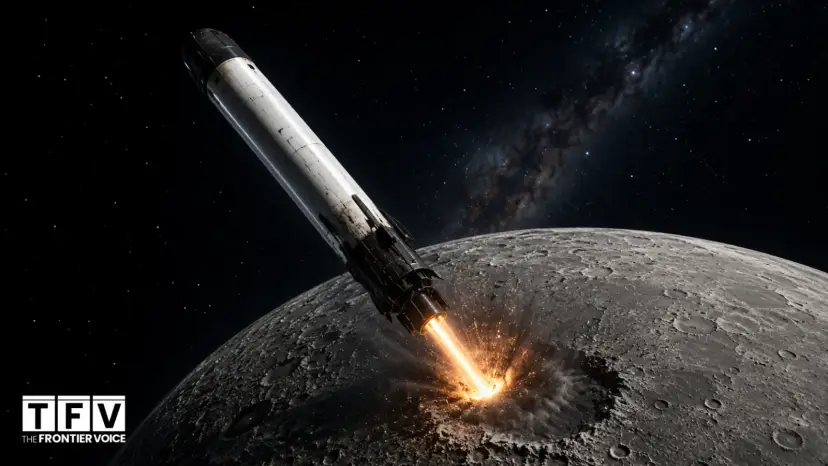
The second stage of SpaceX's Falcon 9 rocket, weighing nearly 4 tons, is expected to collide with the Moon today. The rocket stage has remained in space since launching Firefly Aerospace's lunar lander in January 2025.
According to experts, the object will strike the Moon's Einstein Crater at a speed of approximately 8,690 kilometers per hour, potentially creating a large cloud of lunar dust. However, the impact will not be visible from Earth with the naked eye.
SpaceX said the collision is unintentional. Because the lunar mission required additional energy, the rocket's upper stage did not return to Earth. Instead, it remained in space, where solar activity and gravitational forces gradually altered its trajectory toward the Moon.
Scientists say the impact poses no danger to Earth or human life. Instead, it is expected to provide valuable scientific data about the Moon's surface and highlight the growing need for responsible management of space debris in future missions.