

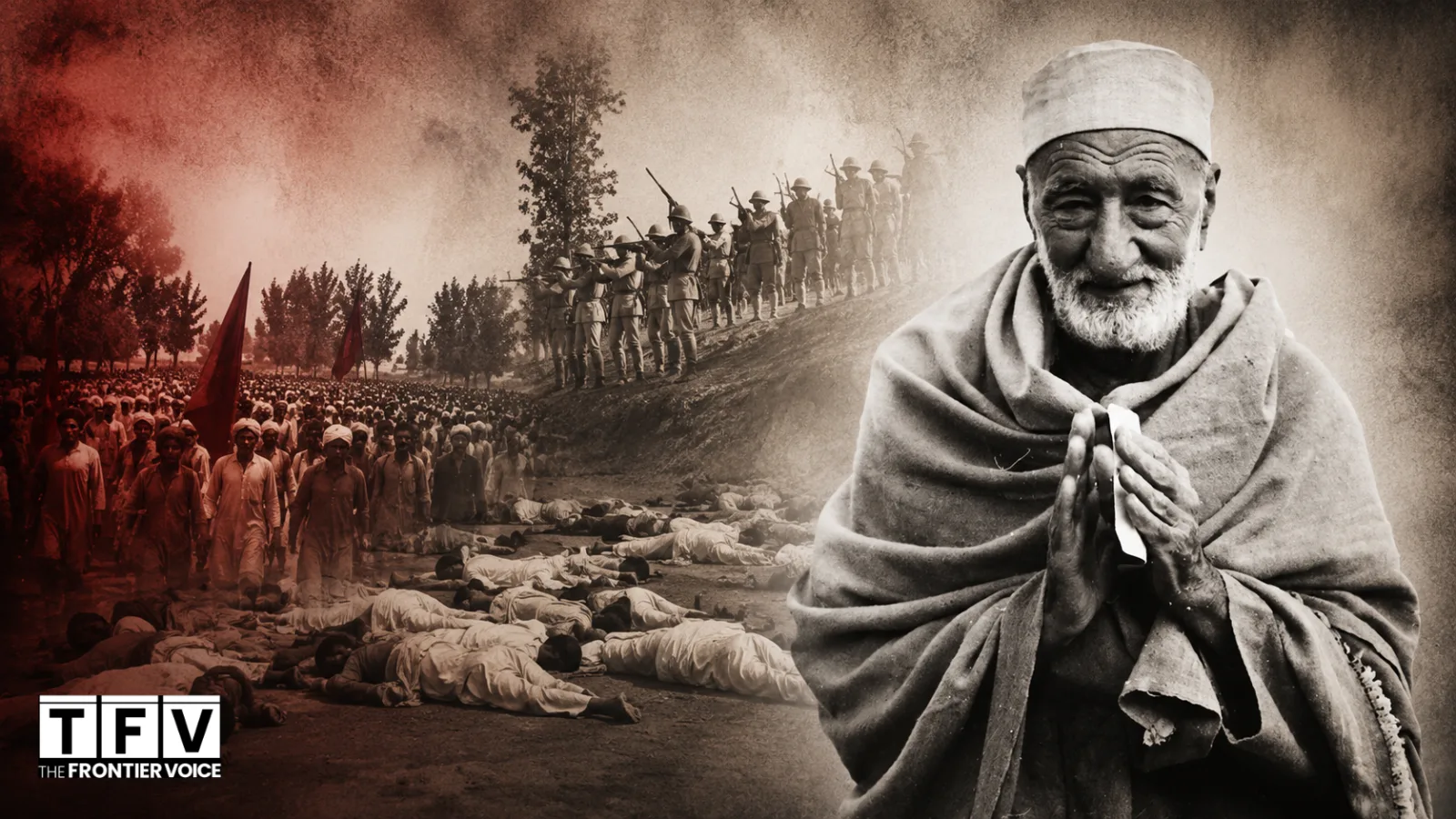
August 12, 1948, remains one of the most contested and significant episodes in the political history of present-day Khyber Pakhtunkhwa. Known as the Babra incident or Babra massacre, the event took place roughly a year after Pakistan’s creation, when police opened fire on supporters of the Khudai Khidmatgar movement gathered at Babra in Charsadda. The exact number of people killed and wounded remains disputed.
The political background
After Pakistan’s creation, the former North-West Frontier Province, now Khyber Pakhtunkhwa, experienced intense political tensions.
The Khudai Khidmatgar movement, led by Khan Abdul Ghaffar Khan, popularly known as Bacha Khan, remained an influential political force in the region.
Following political changes in the province, the government of Dr Khan Sahib was removed and a new provincial government led by Abdul Qaiyum Khan was established. Khudai Khidmatgar supporters opposed the political changes and the arrest of their leaders.
In July 1948, the provincial government also introduced an ordinance giving authorities broad powers to detain people without assigning a reason and to confiscate property. The measure further intensified political tensions.
What happened on August 12?
On August 12, 1948, supporters of the Khudai Khidmatgar movement gathered to protest against the arrests of their leaders and government measures. Historical accounts say the protesters moved towards the Babra ground in Charsadda.
Police subsequently opened fire on the gathering.
However, accounts of what followed differ substantially.
The official communiqué cited in a historical study recorded 15 deaths and around 50 wounded. But contemporary reporting gave considerably higher figures. A study published by the National Institute of Historical and Cultural Research cites a Morning News report from August 19, 1948, which reported 300 people killed and between 400 and 500 wounded.
Khudai Khidmatgar sources have given still higher figures, with some accounts claiming that more than 600 people were killed. Because of these conflicting accounts, there is no universally accepted death toll for the incident.
What did Abdul Qaiyum Khan say?
Historical records also preserve statements attributed to then Chief Minister Abdul Qaiyum Khan concerning the incident.
A historical study records his explanation that Section 144 had been imposed at Babra and that firing took place after the gathering did not disperse. The same source records a particularly harsh statement attributed to him regarding the amount of ammunition used during the firing.
What happened afterwards?
The confrontation was followed by further action against the Khudai Khidmatgar movement.
In September 1948, the central government banned the organisation and many of its supporters were arrested. The provincial government also destroyed the movement’s centre at Sardaryab in Charsadda.
Over the decades, the Babra incident has been remembered very differently by different political and historical groups. Khudai Khidmatgar and Pashtun nationalist circles have described it as a major massacre of their supporters, while other accounts differ over the circumstances of the confrontation and, particularly, the number of casualties.
Why does Babra still matter?
The incident remains part of the political and historical memory of Khyber Pakhtunkhwa. Every year on August 12, political and nationalist groups commemorate those who died and discuss the role of the Khudai Khidmatgar movement in the province’s political history. Commemorative events were also held in 2026.
The Babra tragedy therefore remains more than a dispute over a number. It provides a window into the political tensions of Pakistan’s first years, the changing balance of power in the former NWFP, the Khudai Khidmatgar movement and the relationship between the new state and provincial political forces.