

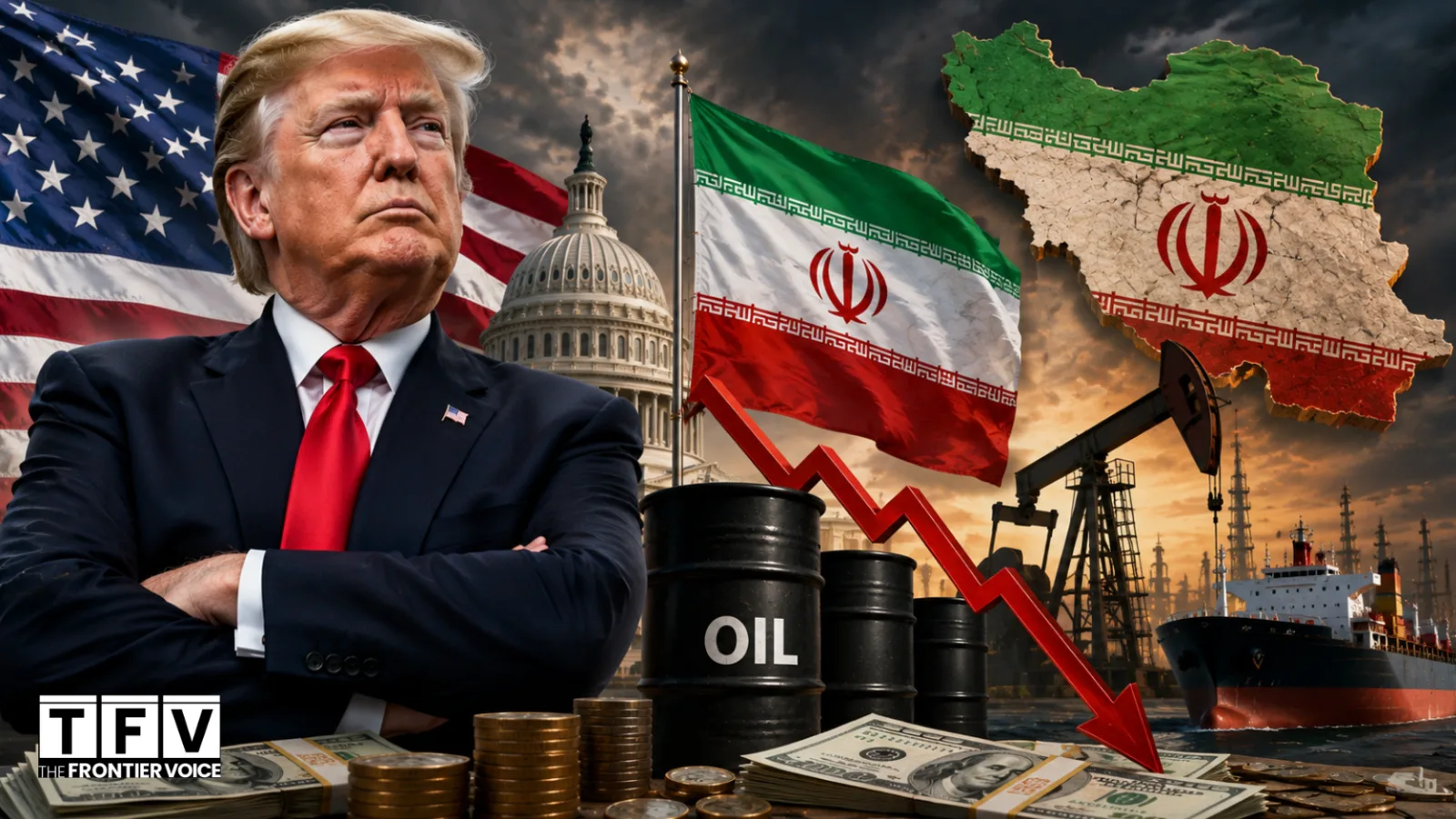
The Trump administration is preparing to increase economic pressure on Iran, with the US Treasury Department having several options to target Tehran’s oil revenues, financial networks and overseas assets.
According to Bloomberg, the US government has not yet disclosed what specific measures it may announce, but several options are reportedly under consideration.
One of the most significant measures could involve targeting Chinese companies and financial institutions that facilitate purchases of Iranian oil. China accounts for more than 90% of Iran’s oil exports, meaning sanctions on major Chinese buyers or financial institutions could directly affect Tehran’s oil revenues.
Washington could also target currency exchange companies and financial intermediaries that help Iran transfer and convert funds earned from oil sales. Iran often receives oil payments in Chinese yuan and relies on financial networks to convert those funds into other usable currencies.
Another option is the imposition of secondary sanctions on foreign companies and banks conducting even limited business with Iran. Such measures could force international firms to choose between maintaining their business ties with Tehran and retaining access to the US financial system.
The United States could also consider seizing certain Iranian government assets located abroad rather than simply freezing them. However, such a move would be significantly more complicated from both legal and diplomatic perspectives.
Washington may also expand its campaign against Iran’s so-called “shadow fleet,” targeting not only individual vessels but also shipping companies, terminals and other infrastructure involved in transporting Iranian oil.
The potential economic measures could have consequences beyond Iran. A significant decline in Iranian oil exports could reduce global crude supplies and push international oil prices higher.
Meanwhile, diplomatic efforts surrounding the Iran-US conflict appear to be intensifying. Iran has been engaging with Pakistan, Türkiye and Qatar, while Washington has also increased contacts with European countries including Austria and Greece.
The diplomatic efforts are aimed at encouraging Washington and Tehran to return to negotiations. However, experts caution that the countries involved may currently be acting more as diplomatic channels than formal mediators.