

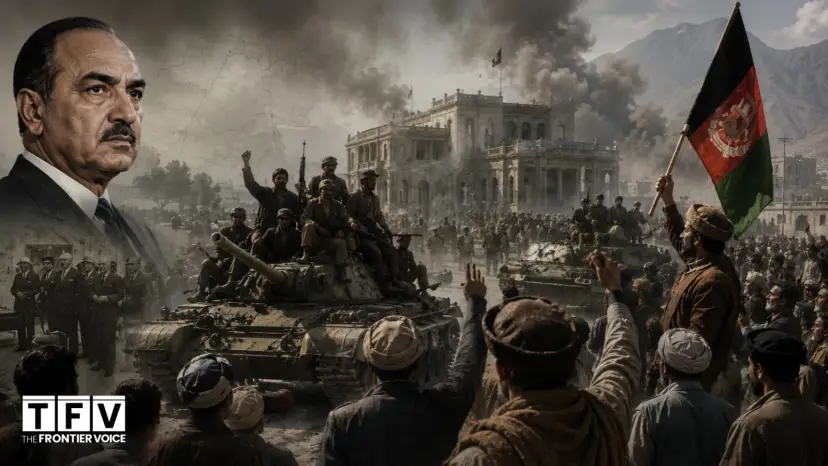
The Saur Revolution, which began on 27 April 1978, is widely regarded as one of the most significant turning points in Afghanistan's modern history. The military coup overthrew President Mohammad Daoud Khan, brought a communist government to power, and marked the beginning of decades of political instability, armed conflict, and foreign intervention.
The revolution derives its name from "Saur," the second month of Afghanistan's Solar Hijri calendar, during which the coup took place.
At the time, President Mohammad Daoud Khan had been in power since 1973, when he abolished the monarchy by overthrowing King Zahir Shah and declared Afghanistan a republic. Five years later, military officers affiliated with the People's Democratic Party of Afghanistan (PDPA) launched a coordinated coup against his government.
On 27–28 April 1978, fierce fighting erupted in Kabul as military units attacked the presidential palace and other strategic installations. Daoud Khan reportedly refused to surrender and was killed along with several members of his family, bringing his government to an abrupt end.
Following the coup, Nur Muhammad Taraki assumed power, and Afghanistan became governed by a communist administration. The new leadership introduced sweeping reforms, including land redistribution, educational expansion, and measures aimed at transforming Afghan society. However, these policies faced strong resistance from religious leaders, tribal groups, and conservative communities.
The unrest soon escalated into armed rebellion across the country. As instability intensified, the Soviet Union deployed its military forces to Afghanistan in December 1979, initiating a conflict that lasted nearly a decade and profoundly influenced regional and global politics.
Historians widely regard the Saur Revolution as far more than a change in government. It is seen as the event that reshaped Afghanistan's political landscape, intensified Cold War rivalries in the region, and set the stage for a prolonged period of conflict whose consequences continue to influence Afghanistan and its neighbors today.