

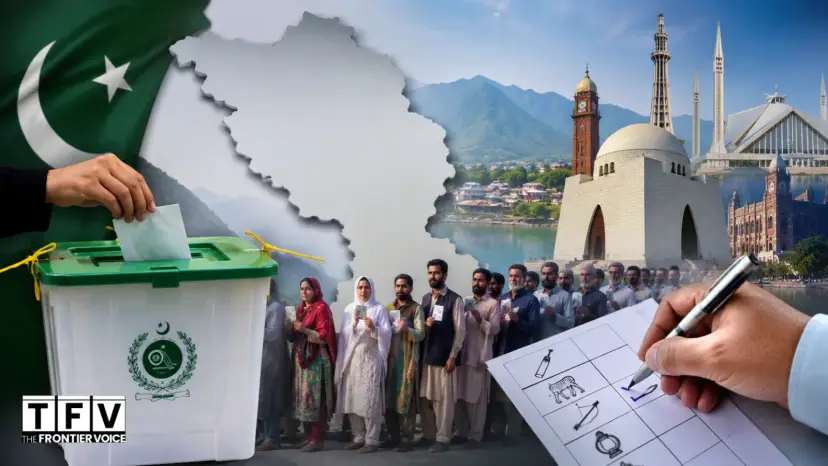
As polling continues for the Azad Jammu and Kashmir (AJK) Legislative Assembly elections, polling stations have also been set up in several Pakistani cities, prompting many people to ask why voting is taking place outside Azad Kashmir.
The answer lies in the 12 refugee seats reserved for registered Jammu and Kashmir migrants living in Pakistan. The arrangement traces its roots to the 1947 Partition and the first Kashmir war, when a large number of residents from the former princely state migrated to Pakistan. Their political representation was later protected under the 1974 Interim Constitution of Azad Jammu and Kashmir.
Of the 45 directly elected seats in the AJK Legislative Assembly, 33 are contested within Azad Kashmir, while 12 are reserved for registered Kashmiri refugees residing in Pakistan. Elections for these seats follow the same electoral process as other constituencies, but polling stations are established in various Pakistani cities where eligible refugee voters are registered.
The refugee seats have also become the subject of political debate. Critics argue that some refugee constituencies have significantly fewer voters than regular AJK constituencies, raising concerns about equal representation and prompting calls for electoral reforms.
Supporters, however, maintain that these seats symbolize the political identity of the 1947 Kashmiri refugees and ensure their constitutional representation until the Kashmir dispute is resolved.
This constitutional arrangement explains why polling stations are established across Pakistan during Azad Kashmir elections, although only registered Kashmiri refugee voters are eligible to cast their ballots.