
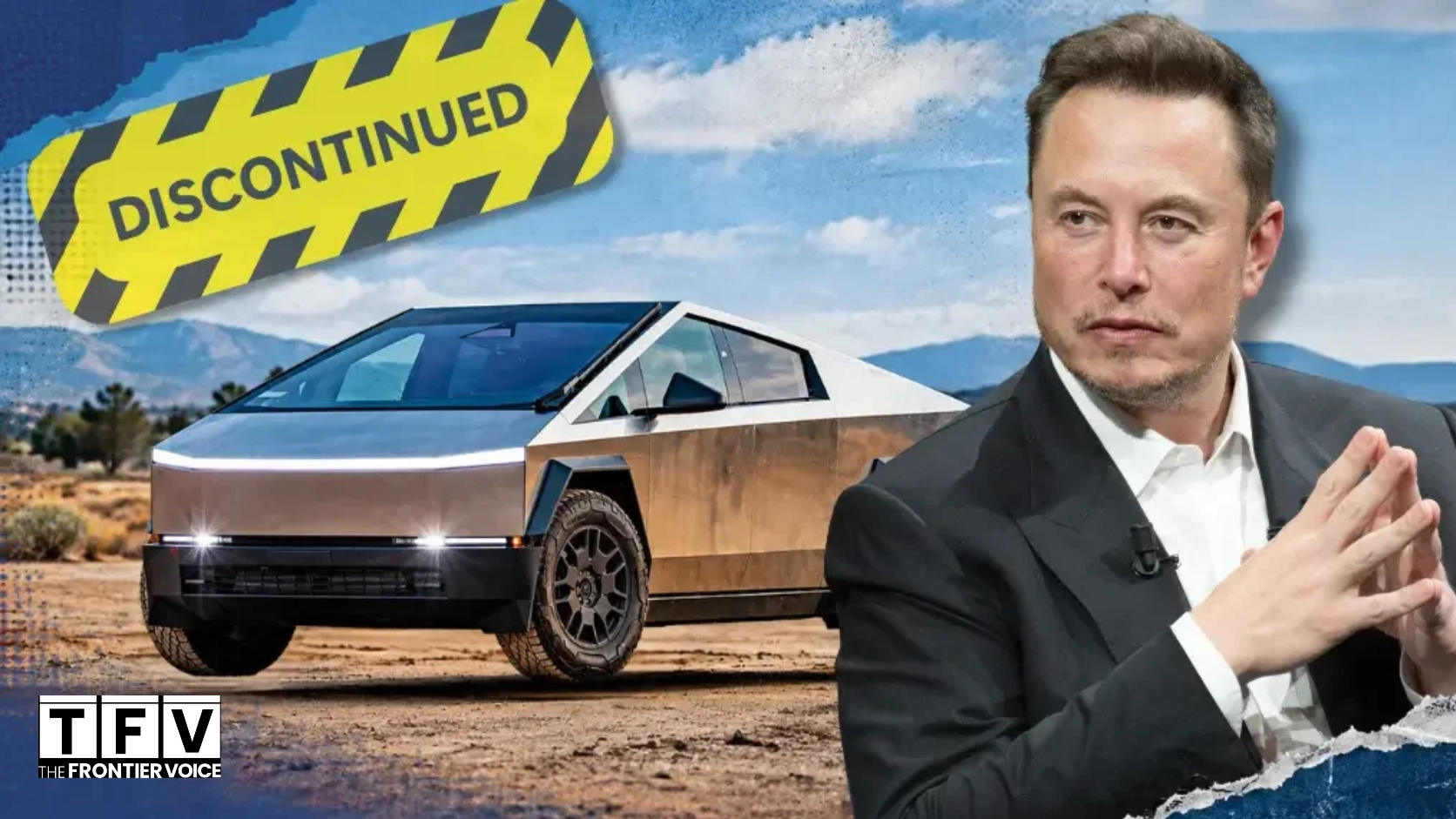
Tesla is planning to gradually end production of its Cybertruck by mid-2027, marking a major shift in the electric vehicle maker’s strategy as sales fall short of expectations.
According to Reuters, Chief Executive Elon Musk announced that production at the company’s Texas factory would be phased out by the middle of 2027.
Musk said the move would help Tesla increase production of its Cybercab, an autonomous taxi designed to operate without a human driver. The vehicle is a central part of the company’s plans to develop a driverless taxi network.
First unveiled in 2019, the Cybertruck attracted worldwide attention because of its unusual angular design and stainless-steel exterior. Tesla presented it as a futuristic alternative to conventional pickup trucks, but sales have remained below the company’s expectations.
According to Kelley Blue Book data cited in the report, Tesla sold 38,965 Cybertrucks in the United States in 2024. Sales fell to 20,237 in 2025, representing a decline of approximately 48 percent.
The figures are significantly below Musk’s earlier projection of selling 250,000 vehicles annually.
The Cybertruck has also faced technical and safety-related challenges. According to the US National Highway Traffic Safety Administration, the vehicle has been subject to multiple recalls involving different issues.
Industry analysts say electric pickup trucks have generally struggled to gain widespread popularity in the United States. The Cybertruck’s unusual design could also face regulatory difficulties in Europe, where strict pedestrian-safety standards apply.
Tesla is increasingly focusing on autonomous driving, artificial intelligence and robotics. Its Cybercab is a two-seat autonomous vehicle that does not feature conventional steering wheels or pedals.
The company has not yet clarified whether Cybertruck production will be transferred to another factory or discontinued entirely. Nevertheless, the decision highlights a significant change in Tesla’s long-term priorities.