
Scientists have discovered that a powerful solar storm in May 2024 triggered an extraordinary increase in high-energy electrons within Earth’s inner radiation belt.
A study published on October 26, 2026, in the journal Geophysical Research Letters reported that the number of electrons with energies of around three mega-electron volts increased by more than 5,000 times compared with pre-storm levels.
These highly energetic particles are sometimes called “killer electrons” because they can damage satellites and sensitive electronic equipment.
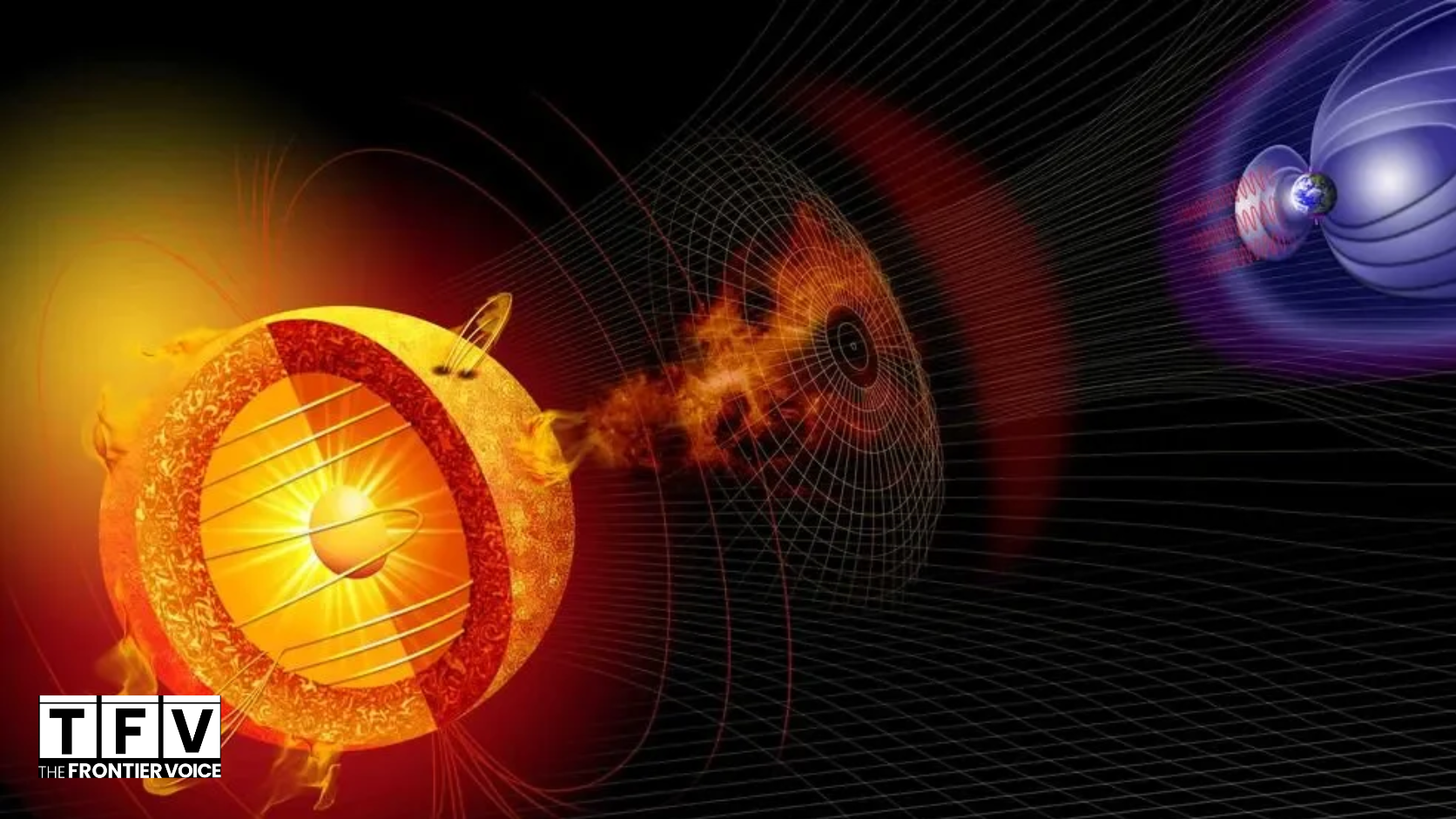
Earth’s magnetic field provides natural protection against charged particles arriving from space. Two major regions of trapped radiation surround the planet, known as the Van Allen radiation belts.
Scientists had traditionally considered the inner radiation belt a relatively strong barrier against highly energetic electrons. However, the May 2024 solar storm challenged that understanding.
The storm was classified as G5, the highest level on the geomagnetic storm scale. It significantly reduced the amount of cold plasma in a region surrounding Earth known as the plasmasphere.
Researchers believe this change created favourable conditions for electromagnetic waves, known as chorus waves, to accelerate electrons and increase their energy.
Scientists associated with Nagoya University in Japan analysed data collected by a Japanese satellite that has monitored Earth’s radiation belts since 2017.
The observations showed that the increase occurred gradually. Lower-energy electrons increased first, followed by a rise in higher-energy particles over the next 24 hours.
Such particles can penetrate satellite shielding, damage electronic components, disrupt operations and potentially shorten the lifespan of spacecraft. Astronauts may also face increased radiation exposure.
The satellite continued detecting elevated levels of these energetic electrons until October 2024.
Researchers say the findings could improve understanding of space weather and help scientists develop better forecasting systems to protect satellites, spacecraft and astronauts from future radiation events.