
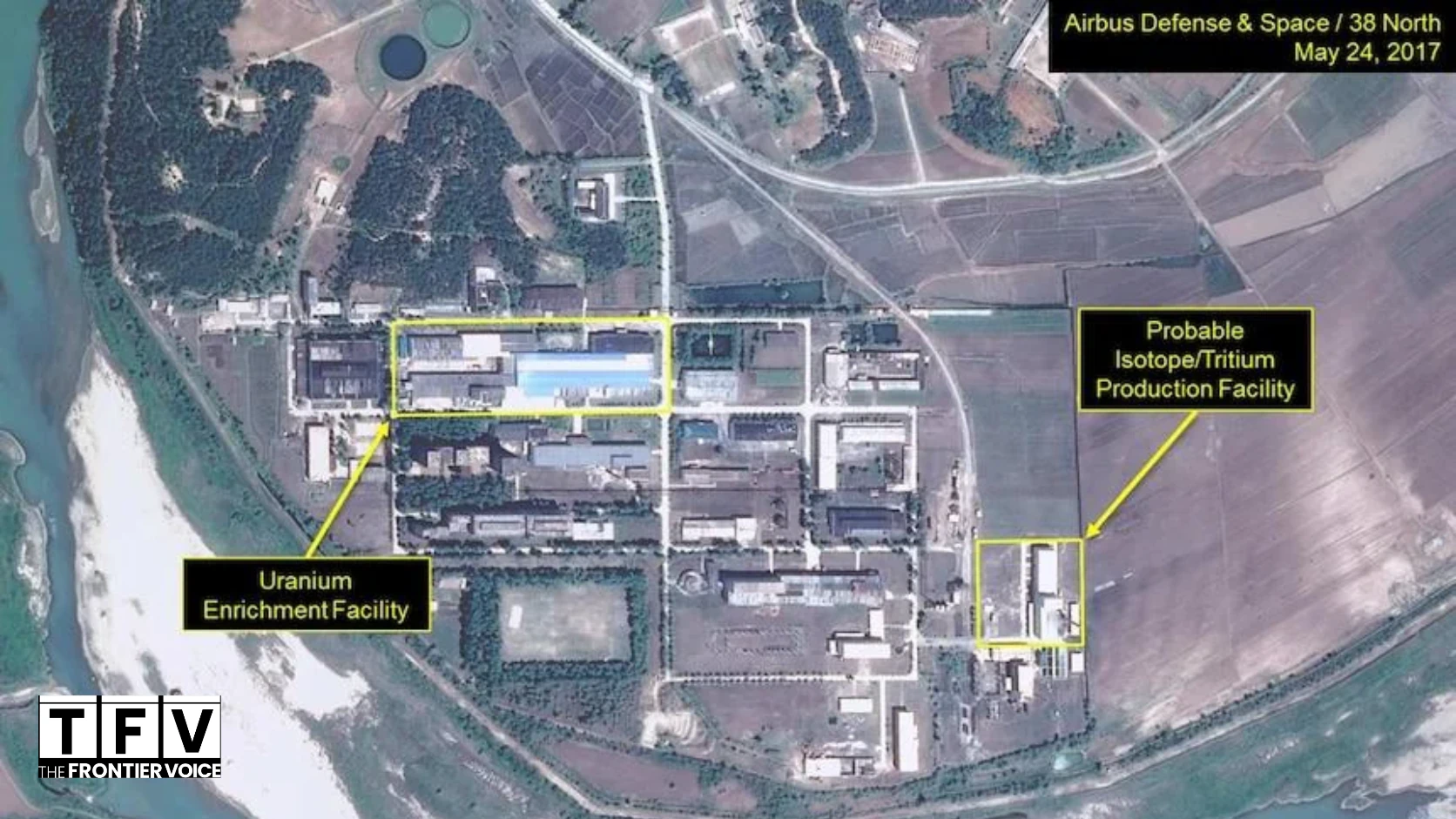
The International Atomic Energy Agency (IAEA) has raised fresh concerns over North Korea’s expanding nuclear programme, reporting that the country has extended its uranium-enrichment infrastructure at the Yongbyon nuclear complex.
According to Reuters, IAEA Director General Rafael Grossi said the external construction of a new extension to the original enrichment facility was complete by late October 2026. The agency has also observed ongoing enrichment operations at Yongbyon and Kangson, alongside construction activity linked to another enrichment facility.
Grossi described the continued expansion of North Korea’s nuclear programme as a serious concern.
The IAEA has not had direct access to North Korea since the country expelled international inspectors in 2009. As a result, the agency relies largely on satellite imagery and other available information to assess developments at nuclear facilities.
The latest assessment also points to possible continued operation of Yongbyon’s five-megawatt nuclear reactor, which produces plutonium. The reactor is believed to be in its seventh irradiation cycle. Spent fuel removed from such reactors can potentially be reprocessed to extract plutonium, a material that can be used in nuclear weapons.
A separate light-water reactor at the complex has reportedly been operating since April 2026.
North Korea’s nuclear programme has remained a major concern for international security for years. The country is believed to be producing both highly enriched uranium and plutonium, two materials that can be used in the development of nuclear weapons.
The expansion of enrichment capacity could increase concerns among neighbouring countries, particularly South Korea and Japan, as well as the United States. It also raises questions about the effectiveness of international efforts to limit North Korea’s nuclear development.
However, the full scale of the programme remains difficult to establish without access for international inspectors. Satellite observations can identify construction and operational patterns, but they cannot replace direct verification.
The IAEA’s latest warning underscores the continuing challenge of monitoring nuclear activities in a country that remains largely closed to international inspection.