

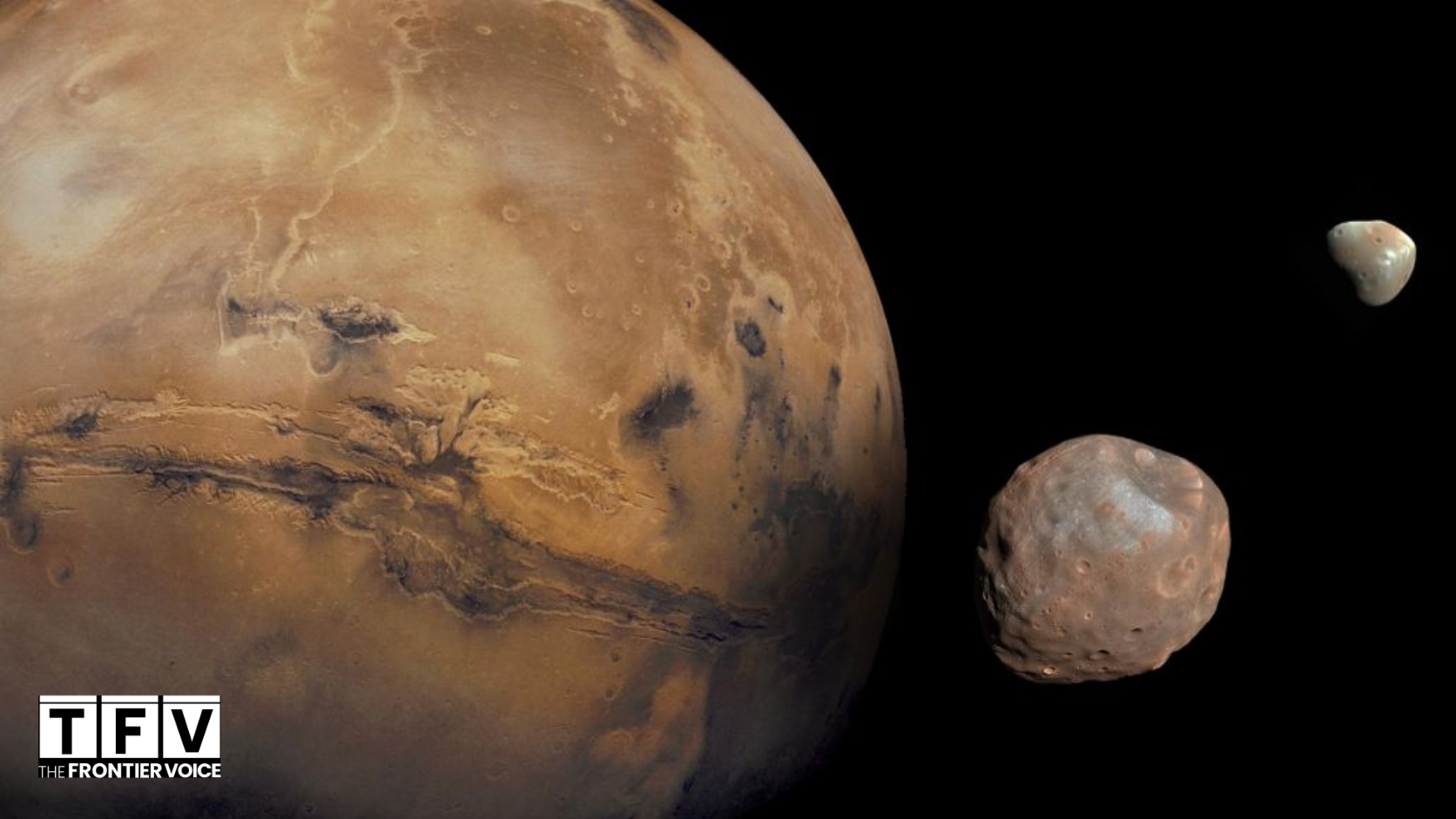
Japan has launched a space mission aimed at collecting samples from Phobos, one of Mars’ two moons, and bringing them back to Earth. The ambitious mission is expected to help scientists investigate the origins of Mars’ moons and gain new insights into the formation of the solar system.
According to international media reports, the mission was developed by the Japan Aerospace Exploration Agency (JAXA) and launched aboard an H3 rocket from the Tanegashima Space Center.
The five-year mission will attempt to deploy a robotic prospector and a rover on the surface of Phobos. These robotic systems are expected to examine the moon’s surface and help collect samples of dust, soil and rocky material for scientific analysis.
If the mission succeeds, the collected material could reach Earth in 2031. NASA and European partners are also contributing to the mission, highlighting the international scientific interest in exploring Mars’ moons.
Scientists hope that studying the samples will help answer fundamental questions about how Phobos and Mars’ other moon, Deimos, formed. The findings could also provide valuable clues about the early history of the solar system and the processes that shaped planetary bodies.
By bringing material directly from Phobos to Earth, researchers will be able to conduct detailed laboratory analyses that would be difficult to carry out using spacecraft instruments alone.
The mission represents a significant step in planetary exploration, with the potential to deepen humanity’s understanding of Mars and its mysterious moons.