
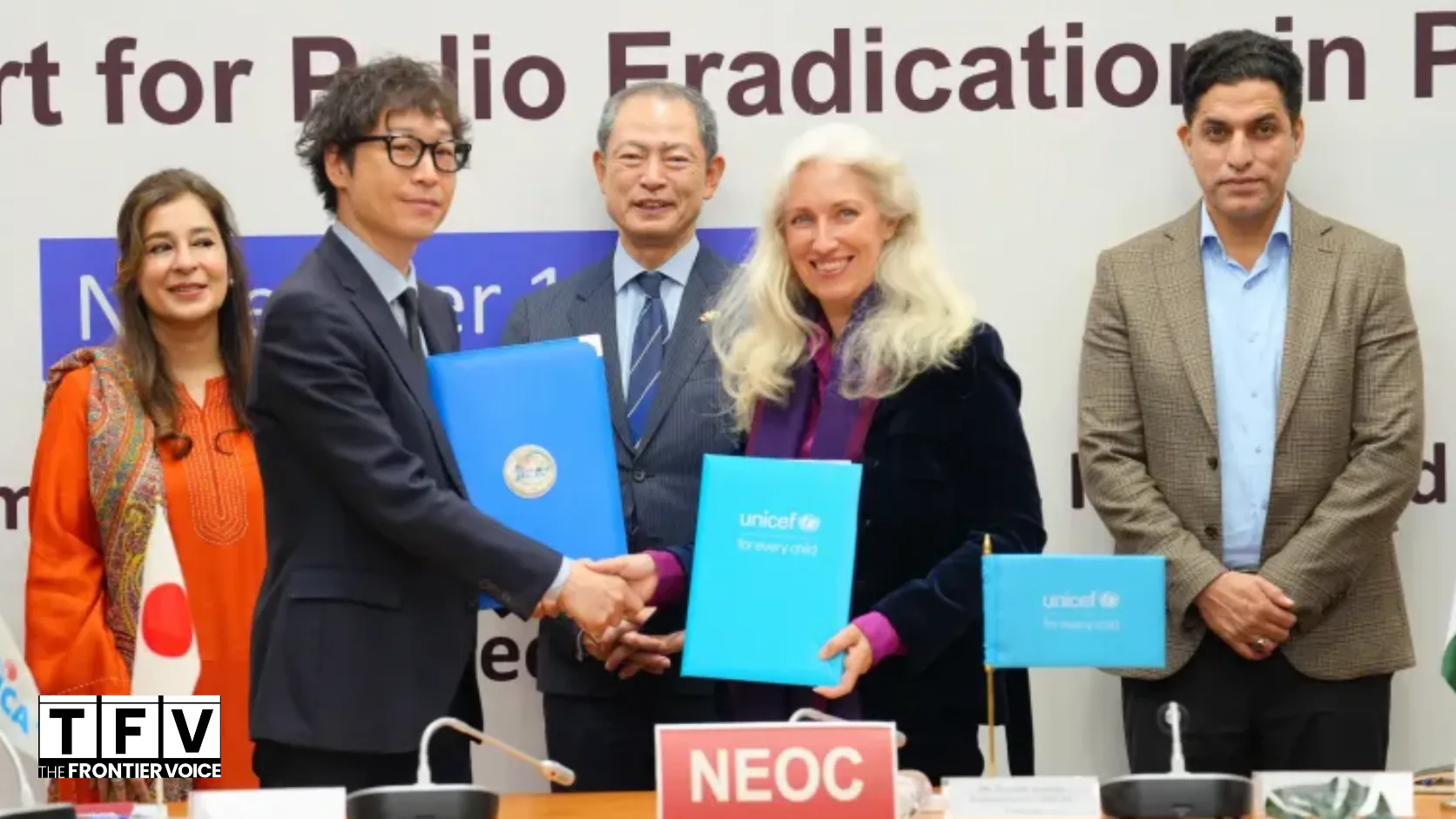
Japan has announced a grant of $4.3 million to support Pakistan’s efforts to eliminate polio. The funding will be used to purchase 28 million doses of polio vaccine, according to a report published on November 14.
The assistance comes as Pakistan continues its nationwide vaccination efforts against a disease that can cause permanent paralysis, particularly among young children. Although polio is preventable through vaccination, the virus remains a public-health concern in Pakistan.
Pakistan and Afghanistan are the only countries where wild poliovirus transmission continues. Health authorities have repeatedly stressed the importance of reaching every child, including those living in remote communities and areas affected by insecurity or population movement.
Vaccination campaigns can face several challenges. These include difficulties reaching mobile populations, parental concerns, misinformation and security risks for frontline health workers. Such barriers can leave children unprotected and allow the virus to continue circulating.
Japan’s grant is expected to strengthen vaccine availability and support immunisation activities. However, the purchase of vaccine doses is only one part of the wider effort. Effective delivery, reliable monitoring and public trust are equally important.
Parents are encouraged to ensure that children receive polio vaccine doses during official campaigns, even if they have already received routine immunisations. Health professionals say repeated doses are important for building strong protection.
The broader objective is to interrupt transmission and ensure that no child is left vulnerable to a preventable disease. International support can provide valuable resources, but sustained local participation will remain essential if Pakistan is to achieve a polio-free future.