
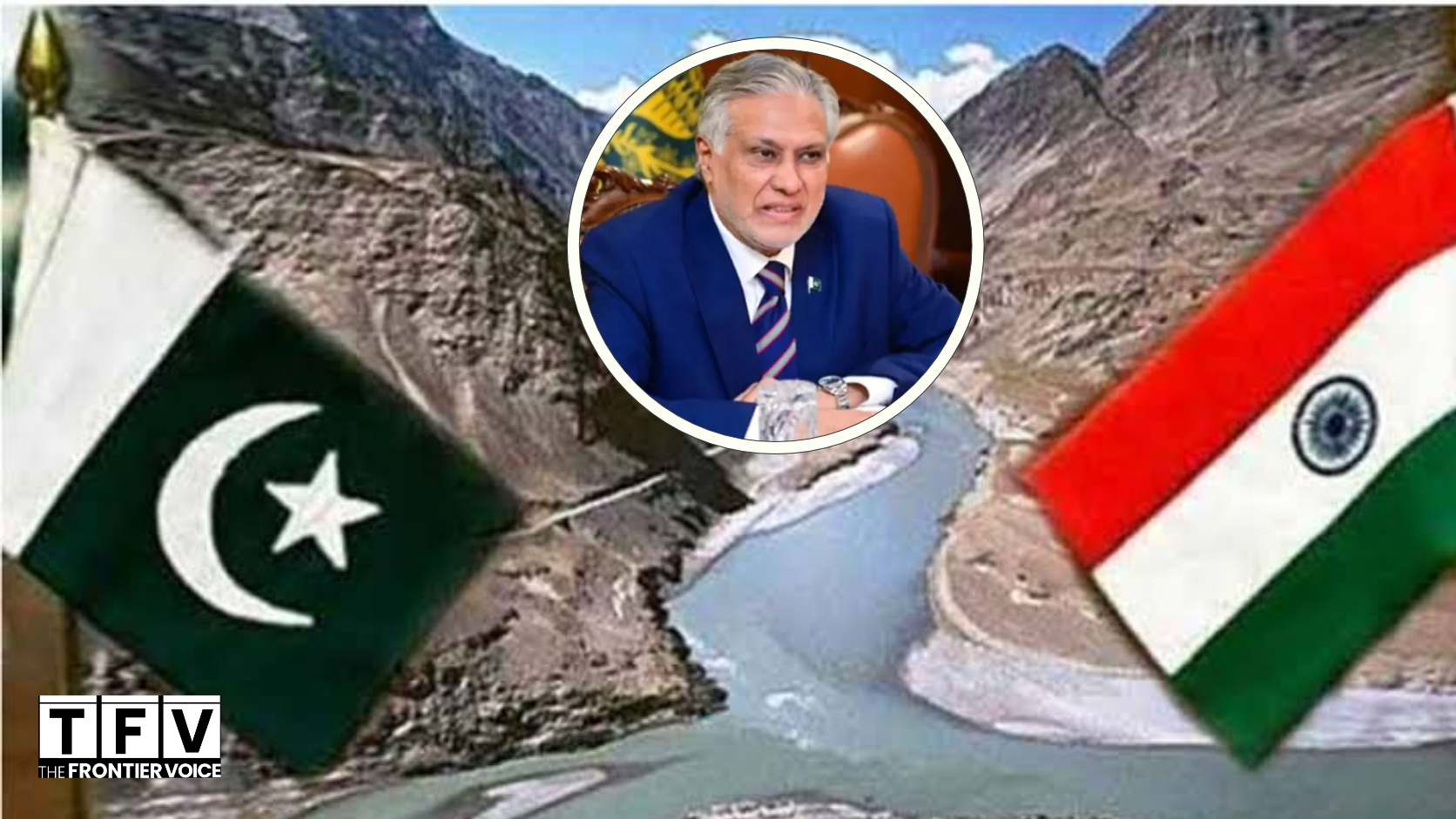
Pakistan's Deputy Prime Minister and Foreign Minister Ishaq Dar has stressed that the rights of countries sharing the Indus River system must be respected under international agreements. He has also maintained that shared water resources should not be used as instruments of political pressure or conflict.
The position reflects Pakistan's longstanding emphasis on the Indus Waters Treaty, which provides the legal framework governing the distribution of river waters between Pakistan and India.
Signed in 1960, the treaty has served as a central mechanism for managing water-related issues between the two neighbouring countries for decades. It allocates the eastern rivers to India and the western rivers primarily to Pakistan, subject to the treaty's specific provisions.
However, the agreement became the subject of renewed controversy after India announced in April 2025 that it would hold the treaty in abeyance. Pakistan opposed the move and insisted that its water rights and the treaty's legal protections must be respected.
For Pakistan, the Indus River system is particularly important because a substantial part of its agricultural production depends on irrigation. Any uncertainty surrounding the availability and management of river water could have consequences for farmers, food production, rural livelihoods and the wider economy.
Dar's position emphasises the importance of following the treaty's provisions, maintaining technical communication and resolving disagreements through established legal and diplomatic mechanisms.
The dispute is not limited to water distribution alone. It also has broader implications for regional stability, bilateral relations and the economic security of both countries.
Pakistan has consistently argued that disputes should be addressed through the procedures provided under the treaty rather than unilateral measures.
The future of the agreement will depend on diplomatic engagement, legal interpretations and the actions taken by both countries through relevant international mechanisms. No final resolution of the dispute has been reported in the cited material.
For Pakistan, maintaining the stability of the Indus water system remains a major national concern because of its direct connection with agriculture, food security and economic development.